
10 Points on Tarāwīḥ
(Responding to questions I get every Ramadan)
- What the Prophet actually did
Ā’ishah relates that “The Messenger of God prayed one night in the mosque, and some people came and prayed along with him. He prayed again the following night, and more people joined. By the third or fourth night, people gathered in larger numbers, but the Messenger of God did not come out to them. When morning came, he said: ‘I saw what you were doing, and what stopped me from coming out to you was that I feared it might be made obligatory upon you.’ This was during Ramadan.”
The Prophet was praying in the Prophetic mosque late at night and a few believers joined him. As word spread more people turned up the next day. Seeing this the Prophet stopped. Neither did he continue the late night prayers in formal congregation nor were they ever obligatory. They were literally the usual late night prayers he’d perform at home.
2. Where tarāwīḥ comes from
Tarāwīḥ as people know it was instituted by ʿUmar b. al-Khaṭṭāb as an administrative solution. It accommodated people who either found the late night prayer burdensome or didn’t know scriptures, whilst also unifying scattered groups and individuals who were praying separately in the Prophetic Mosque. It was a facilitation, not a new devotional ideal.
Al-Bukhari compiled the narration of ʿAbd al-Raḥmān b. ʿAbd al-Qārī who said: “I went out one night in Ramadan with ʿUmar b. al-Khaṭṭāb to the mosque. The people were scattered into separate groups. One man was praying on his own, while another was praying and a small group was praying behind him. ʿUmar said: ‘I think that if I gathered these people behind a single reader, it’d be better.’ So he decided to do so, and he gathered them behind Ubayy b. Kaʿb. Then I went out with him on another night, and the people were praying together following their reader. ʿUmar said: ‘What a fine innovation this is! Although, the prayer they sleep through is better than the one they are standing for,’ meaning the latter part of the night - the people were praying in the early part of it.” Clearly, the last part of the narration shows that this wasn’t exactly the Prophet’s night prayer - it was simply something that people in Madinah were doing disparately in a public place which ʿUmar unified. But why were they doing it? Well most people didn’t have access to the scriptures nor could they read fluently so they’d stand before the King and to learn His decrees. For those who were interested, this was a rare opportunity to hear the message in its entirety and grasp its scope.
3. The actual purpose of night prayer
The purpose of night prayers is to read and contemplate God’s guidance. It is not about endurance, pain, or sleep deprivation. The Prophet himself warned: “Perhaps a standing person gains nothing from his standing except loss of sleep.” (Ibn Mājah) Many people assume it’s about a willingness to show sacrifice, but that’s self-inflicted hardship and God’s law doesn’t reward purposeless suffering. To imagine that God delights in mindless pain is deeply offensive to Him.
4. Why many congregational tarāwīḥ gatherings are invalid
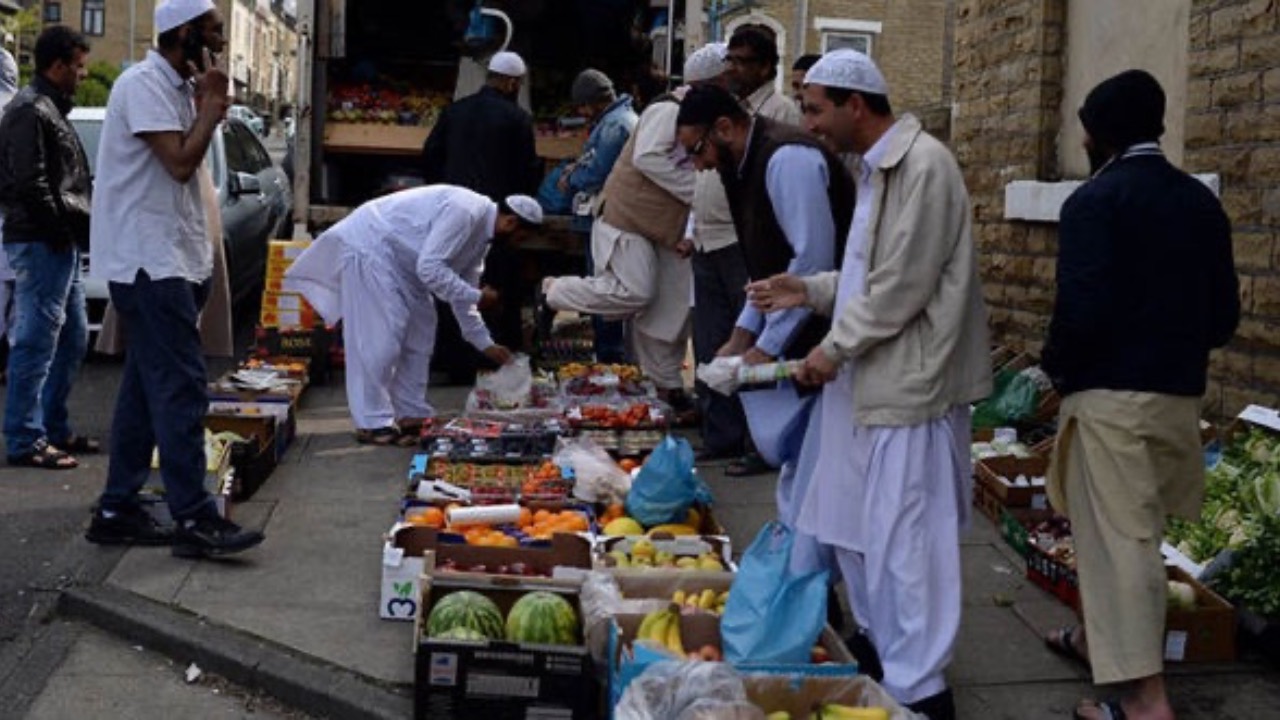
What happens in many mosques in the UK:
- People who don’t understand what they are uttering lead others.
- Arabic is fired out at machine-gun speed, reduced to sound effects.
- Often it’s led by teenagers whom no grown man with dignity should accept as representing him before the Mighty King.
- The rush to finish one 30th of the Qur’an in twenty units, in under an hour, turns God’s words into something mocked by rasped syllables and jerking bodies.
- Yoga/Pilates offers more serenity.
In this form, it would genuinely be better to stay home and rest than to offend the Most High. Of course and quite obviously, this doesn't go for those who understand the spirit of the early evening prayer during Ramadan and contemplate on God's messages accordingly.
5. Those who don’t know understand Classical Arabic
Let’s be mature. If you don’t understand what you are saying or hearing in the night prayer, the benefit is minimal as the Prophet put it: “Perhaps a standing person gains nothing from his standing except loss of sleep.” (Ibn Mājah). To do things you don’t even comprehend like it’s normal is abnormal behaviour. If someone is compelled to do so five times a day because they can’t do better, that’s understandable. However, choosing to multiply it voluntarily is strange. It’s like eating mouldy bread out of necessity, then deciding to eat extra slices for dessert. If the option to actually engage the entire message exists, why would you opt for superficial performance unless it was a cultural habit?
6. What night prayer always was historically
For a thousand years before the Ishmaelites, the ancient faithful prayed at night to read and reflect on God’s decrees. Night was the time of reflection, not public display. Recitation tied to understanding, not ritual incantation. The night prayer was stillness enabling cognition, not exhaustion. For example: “At midnight I rise to give thanks to You, because of Your righteous laws.” (Psalms 119:62) It wasn’t physical performance but conscious engagement with God’s decrees. Furthermore: “My soul remembers You upon my bed, and meditates on You in the night watches.” (Psalms 63:6) Notice the verb “meditates.” The night is valuable because it enables mental presence. And in pointing to cognition and inward orientation rather than choreography, “Arise, cry out in the night… pour out your heart like water before the presence of the Lord.”(Lamentations 2:19)
In premodern times, the night was quiet, private, and calm. Sleep was bi-phasal. People would wake, talk, read, study, and yes, enjoy conjugal activity. The Prophet continued the ancient culture of reflective engagement with scripture for those who were able, but his practice - neither in or beyond Ramadan - was the tarāwīḥ you know, but the late night prayer God refers to in 73:20. As ʿUmar said: “the prayer they sleep through is better than the one they are standing for” so clearly ʿUmar distinguished between the two.
7. What tarāwīḥ is meant to substitute
If night prayer is about contemplating revelation, and tarāwīḥ is seen as its early-evening substitution, then its purpose is obvious. Reading and reflecting on God’s decrees in the evening is the point. Where there is a schedule conflict, study and reflection ought to be prioritised.
8. What Ramadan is explicitly about
God is unambiguous. “Ramadan is the month in which the Proclamation was revealed as guidance for mankind, with clear guiding evidences and the criterion.” (2:185) So it certainly isn’t about chanting sounds. It’s about receiving guidance and obtaining both clarity and discernment.
9. Tarāwīḥ or the Qur’an Program?
Every year people who don’t understand Arabic ask whether they should attend tarāwīḥ or join the Qur’an Program when timings clash. I rarely tell intelligent people what to do, but I do talk through it with them. Given everything above, I think it’s a no-brainer.
10. Cultural habits vs God’s intent
Some habits die hard but we mustn’t dress up cultural ritualism (which it is for many) as divine preference. God doesn’t encourage hardship or mindlessness. Ramadan is about studying the Qur’an as guidance, explanation, and criterion. If someone insists that ritual prayer with zero understanding is superior to studying and reflecting on scripture during Ramadan, that’s a level of both ignorance and irrationality that logic can’t help. Of course, the early Ishmaelite faithful had intellects that flourished. Hasan al-Baṣrī said: “An hour of contemplation is better than standing the entire night in prayer.” Ibn ʿAbbās said: “Two brief units of prayer with understanding are better than standing the whole night without attentiveness.”
Think about what's often prioritised. People hear, “Tell them the story so they may reflect” (7:176) or “This is how We explain the revelations for those who reflect” (10:24) or “We set forth parables so that they may reflect” (59:21) but don’t reflect on any of it nor take in the story, explanation, or parable. What is the Qur'an for then?

Responses