
Recovering Covenant from Identity
In a world characterised by revolutionary change, perpetually contrasting social and political demands require that we periodically destroy what has been created in order to reconstruct a renewed conceptualisation better suited for the next wave of life, competition, or technology. This unsettles those who instinctively equate continuity with faithfulness and disruption with betrayal but it remains an inescapable feature of reality. Civilisations that refuse renewal do not preserve themselves, they just fossilise and become irrelevant.
Muslims are not exempt from this rule, even if many would like to imagine that sacred inheritance places them outside the logic of history. Across centuries, approaches to knowledge, law, and authority have shifted repeatedly. The approach of al-Bukhārī and Muslim was not that of Ibn Ḥajar or al-ʿIrāqī. The world of the Companions was not the world of Abū Ḥanīfah or Aḥmad b. Ḥanbal, and none of these resembled the 15th century juristic imagination that Muslims today treat as timeless. Law has never been done the same way twice simply because history never stands still long enough to allow it.
Even the Qur'an itself has never been encountered uniformly. Its reception, literacy, function, and social location have shifted dramatically. The medieval believer did not relate to the text as the modern believer does. Today, billions of people recite phonemes without semantic comprehension, engaging the text as sound, symbol, and ritual rather than as directive speech addressed to moral agents. The relationship has changed whether Muslims want to acknowledge or not.
The more serious problem is that contemporary Muslims have reconstructed a conceptualisation of the Qur'an and the covenantal project that is profoundly unsuited for the present historical moment. It's unsuitability is down to the fact that it was imposed quietly, incrementally, and without ceremony, through colonial domination and its scheming. Like the crab placed in cold water and gradually boiled, Muslims adapted without recognising that the frame itself had shifted. This is where a hard distinction has to be drawn. There is a difference between maximising outcomes as God's faithful, and preserving a colonial-informed identity that merely feels religious. The latter offers psychological comfort by rendering suffering intelligible, assigning blame, supplying heroes and enemies, and stitching together a narrative past and an imagined future. It explains why things are broken without requiring responsibility for repair, and this comfort has come at an extraordinary cost.
Identity, after all, does not emerge arbitrarily. Psychologically, it forms first as a survival mechanism. A child, a community, or a people exposed to instability, humiliation, or violence constructs a story that explains why the world is hostile and how survival is possible within it. That story, regardless of its accuracy, preserves internal dignity and coherence irrespective of the dissonance it might cause. Over time, however, what began as protection hardens into fixation and when suffering becomes central to identity, improvement becomes threatening. Growth implies that the old story is no longer needed and that the self built around defence and grievance must dissolve. This is why identities forged under pressure are so durable. They are inherited rather than chosen, socially reinforced, and symbolically rewarded. For many Muslims, change is experienced not as the relief it is but as loss. Objectively, you would think transformation would bring clarity, confidence, and agency, but subjectively it feels like betrayal, erasure, or abandonment of one’s people.
The covenantal tradition was never a tribal identity project with that distortion a late development. From Abraham onwards, the covenant is framed as responsibility, not possession. It is not a badge, though post-exilic Second Temple Judaism increasingly treated it as one. At its core, the covenant concerns the ordering of human life under God’s law, the restraint of power, the protection of the vulnerable, and the establishment of justice and God's order across human societies. Its language is legal and ethical, not ethnic. It addresses humanity as humanity.
God's final Proclamation (al-Qur'ān) continues this trajectory. God speaks to human beings as moral agents with primary concern for conduct, power relations, and law. The covenant is meant to move outward, to confront societies, elites, and systems and must therefore be intelligible to the world it addresses. This universality poses a problem for modern immigrant Islam which has become locked within ethnic silos. Muslimness as a modern ethnoreligious identity is deprived of confidence in the covenant’s intrinsic authority, so it substitutes language, dress, cultural markers, and inherited conventions as gatekeeping mechanisms. Of course, if you remove these legitimacy collapses. One is suddenly outside, even a "kafir" as a recent Friday sermon put it bluntly.
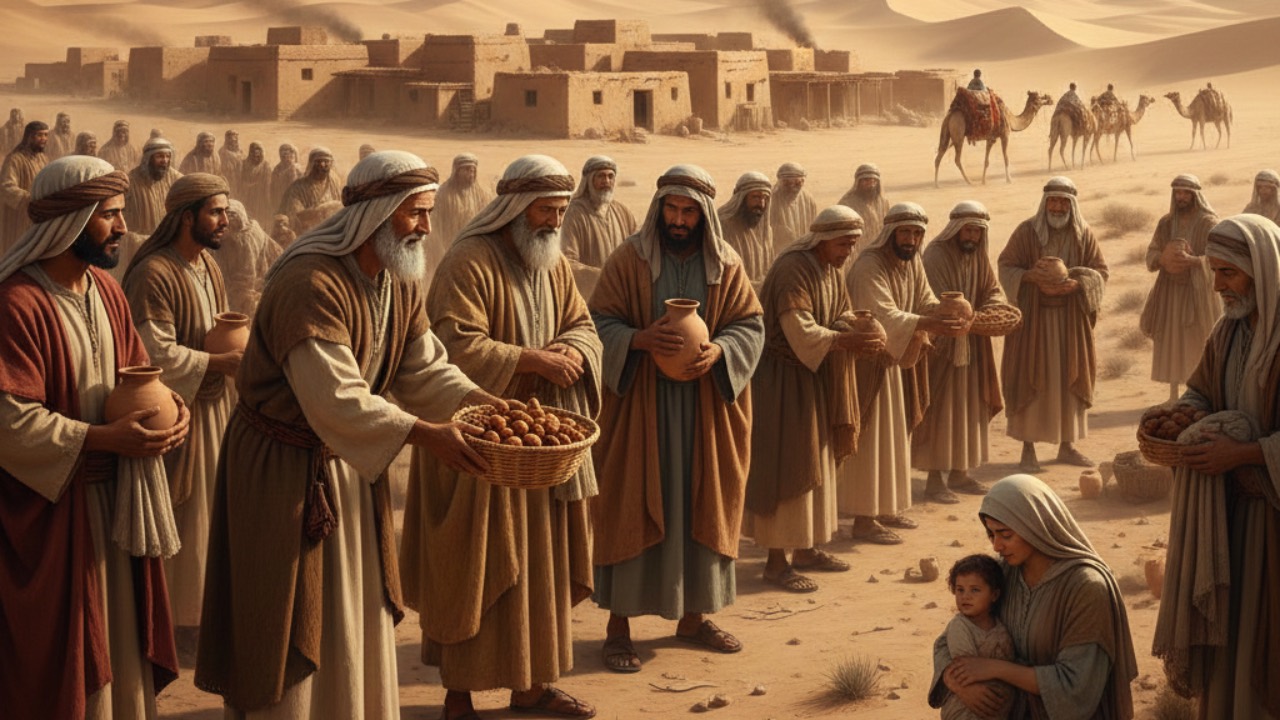
Those most invested in this identity often fail to see that the “Musalman” religion did not emerge from theology, but from history. As the covenantal project collided with empire, sectarianism, colonial rule, and later nationalism, its centre of gravity shifted. This was not just the result of colonial violence, but also of how the colonised responded to it. The pattern repeated across regions, from South Asia under the British Raj, to West Africa, to Southeast Asia, and even to central Arabia where particular tribes were aided and armed by imperial interests.
What began in the 7th century as an Ishmaelite mission experienced as confident and expansive has been portrayed today as a besieged identity. Now, preservation replaces transmission, defence displaces advocacy, and insecurity supplants ideological clarity. The covenant is no longer on the cards let alone something to be carried into the world, and its replacement in the form of Muslimness is something to be protected from it.
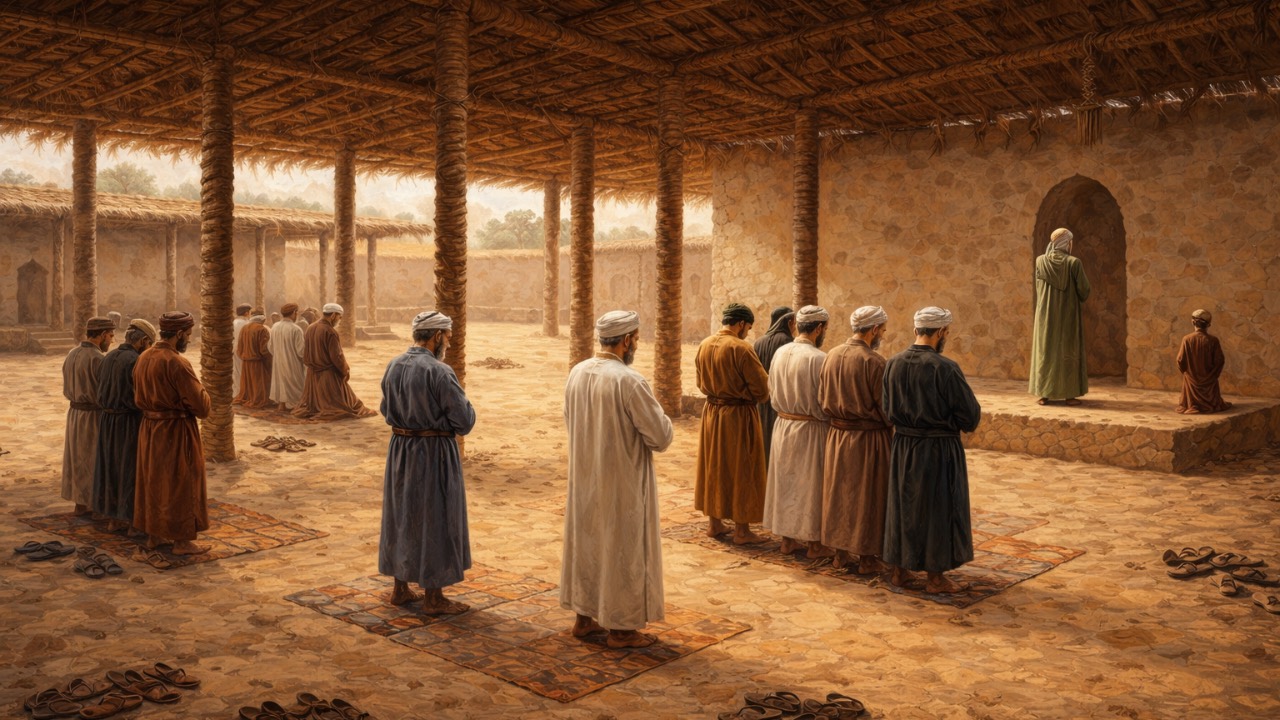
Muslimness names this modern configuration. It is a fusion of language, dress, custom, and collective memory into a defensive posture whose primary function is cultural continuity under pressure. It offers emotional cohesion amid humiliation and erosion but has also radically altered the covenantal tradition, with aesthetic remnants and colonial comprehension brought together to reduce it to an identity marker. Here, universal logic is subordinated to group survival.
This is why contemporary Muslim rhetoric revolves obsessively around identifying with “the ummah” which means group. The "global ummah" is treated as an absolute moral referent and is an imagined community in precisely the same sense as the "nation." It is sustained by narrative, symbolism, media, and institutional repetition, not by shared legal vision or moral agreement. Like nationalism, it generates powerful emotion while masking deep internal fragmentation. The irony is visible wherever Muslims live together in proximity. Instead of unity, difference intensifies. Boundary policing replaces solidarity and denying membership of this nebulous group in the form of excommunication is routine.
From a covenantal perspective, this outcome is predictable. An identity oriented around survival will always prioritise internal conformity over external responsibility. Gradually, attention shifts away from law, governance, economics, and the disciplining of power towards ritual, symbols, and boundary enforcement. The covenant ceases to be about ordering society according to God’s will and becomes primarily about maintaining difference from others. Inevitably, several consequences follow:
- Covenantal law is frozen into heritage. Instead of being applied creatively to new historical conditions, it is defended as a static inheritance where innovation and agility is framed as threat rather than necessity, rendering the law increasingly irrelevant while claiming fidelity.
- The universal address of God's final Proclamation is narrowed. Rather than speaking to diverse peoples, it is treated as incoherently talking to Muslims. Structural moral critique gives way to communal grievance, and the challenge to elites is replaced by narratives of Muslim victimhood.
- Responsibility is externalised. Failure is attributed to enemies, conspiracies, or divine testing rather than to misrule/mismanagement, internal decay, or abandonment of covenantal principles. This preserves dignity while forfeiting agency.
Psychologically, the Musalman identity functions as a victim identity that explains suffering and preserves the justification for Muslimness, resisting any transformation that would make it unnecessary. In protecting identity, a mission meant to challenge kings becomes a culture seeking protection from them. A law meant to discipline human authority and empower people to become the best versions of themselves becomes a symbol subservient to human authority and false traditions. A universal message becomes an in-group possession. Just as individuals cling to identities formed in trauma long after the threat has passed, ethnic communities remain locked in defensive postures that inhibit growth and productivity. The covenantal mission requires confidence, moral seriousness, and outward engagement. Identity preservation produces the opposite: caution, suspicion, and inwardness.
Moving beyond the Musalman identity does not mean abandoning faithfulness to God, law, or tradition. It means disentangling mission from survival psychology and recovering all three with greater seriousness and better outcomes. The covenant is not a religion that requires an ethnoreligious container. It requires courage, legal intelligence, and a sincere willingness to confront power, including one’s own. It requires speaking in a language intelligible to humanity, not demanding cultural initiation as a prerequisite for moral authority.
Communities are meant to mature the same way individuals do. They are meant to integrate suffering without centring identity on it. They are meant to honour history without becoming imprisoned by it. The covenant was never meant to produce a people who survive by difference but by producing people who transform the world through God’s law, justice, and truth. That mission cannot be fulfilled by an identity designed primarily to endure loss and a confused sense of belonging. It requires leadership and an orientation towards responsibility, authority, and restoration. Until that shift occurs, the covenant will remain present in the Quranic text which God will preserve, but mischaracterised in meaning and paralysed in effect.


Responses