
Dominant vs. Majority Culture in Modern British Islam
The notion of “mainstream” is often invoked to legitimise an idea by appealing to what is assumed to be the view of the majority. However, the term is used uncritically and treated as self-evident, obscuring an important distinction between two separate sociological concepts: dominant culture and majority culture.
Dominant culture is the culture of a group that holds institutional/social power and tends to define what counts as “mainstream.” Amongst ethno-Muslim communities, it operates through their mosques, madrassas, community organisations, and informal clerical authority. In contrast, the majority culture of a wide array of Muslims reflects the broader habits and lived reality of most British Muslims who do not share much conviction in their institutional culture’s ideological assumptions, and who either remain disinterested or lack the social power to contest them.
This distinction exposes how British Muslim narratives function. The dominant culture is not intellectually refined nor does it reflect the majority of British Muslims. It is rooted in an agrarian immigrant culture that is intellectually nurtured in socially deprived urban environments. It holds on to institutional spaces that allows it to present itself as normative while silencing alternative visions. It might be normative, but not in the universal sense. It is normative only within those urban environments and amongst those committed to it.
The Dominant Culture of British Islam
British Muslim institutions were largely shaped by post-war immigration from rural South Asia. Migrants from Pakistani and Bangladeshi villages and towns brought with them a form of Islam embedded in local customs rather than the intellectual and political legacy of the broader Abrahamic tradition. Over time, this culture became institutionalised through mosques, madrassas, and community networks, consolidating an agrarian religious paradigm.
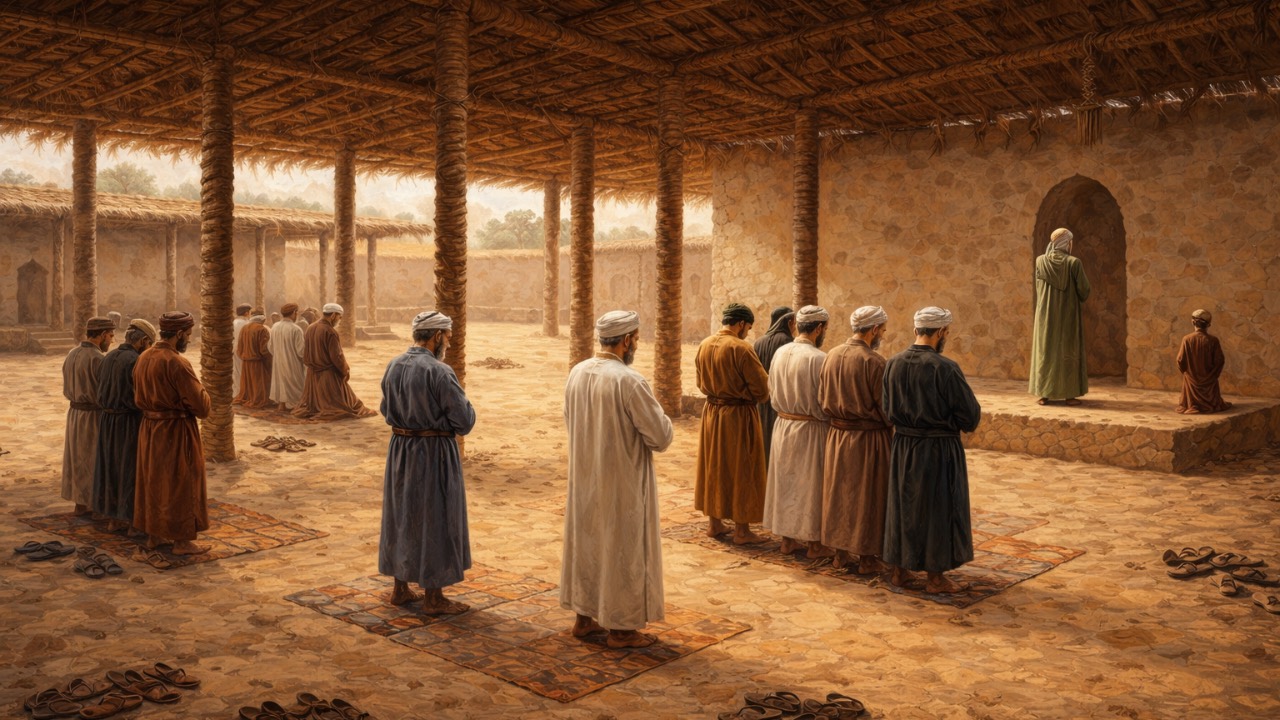
This form of religion, which might be called folk/village Islam, is concerned less with scriptural inquiry for nation building and civilisational progress than with ethnic social conformity. It reinforces itself through repeated patterns of ritual instruction, cultural language preservation, and hierarchical community structures. Sermons focus on ritual observance rather than civilisational depth, while madrassas prioritise phonemic preservation over critical understanding. Because this culture controls the main communal social institutions, it can project itself as the “mainstream,” even if it is neither representative of the majority nor aligned with the covenantal message of the Proclamation.
The Passive Majority
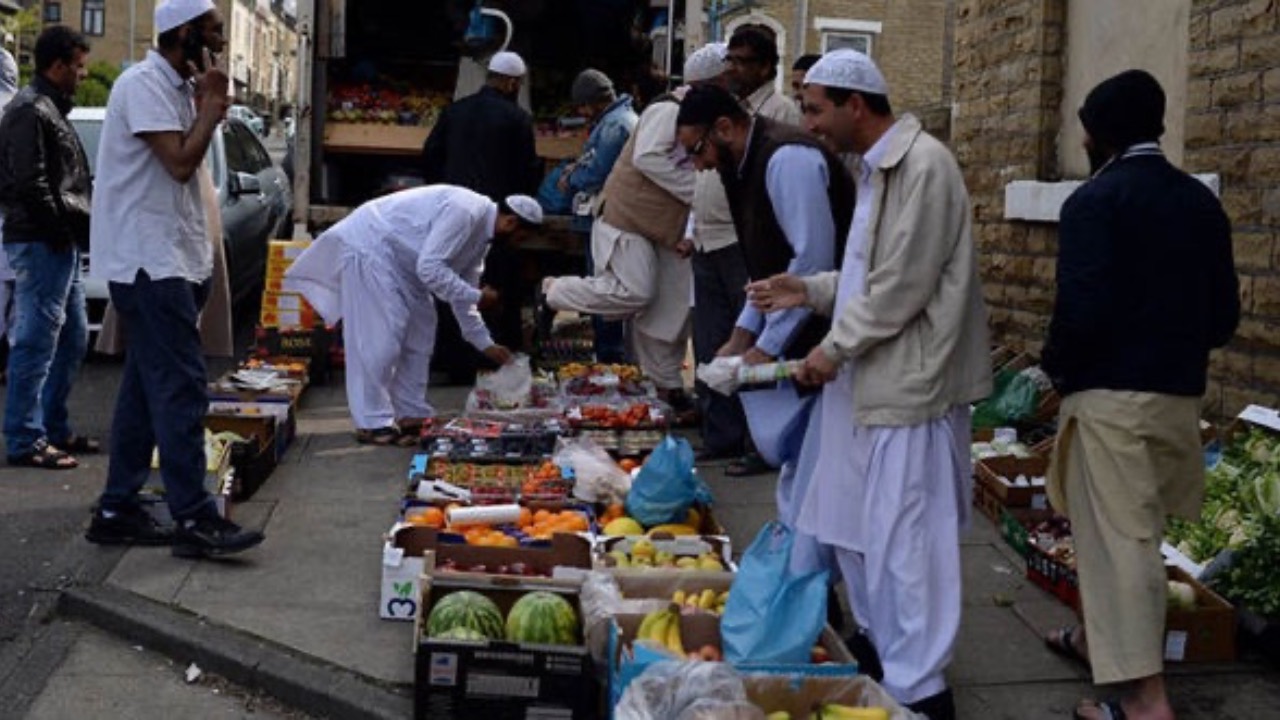
By contrast, the majority of British Muslims are not deeply engaged in this institutional culture. They live in a secular social environment where education, employment, and material advancement dominate their daily concerns. Their "religious" practice is often merely ritual participation: ritual prayers, fasting in Ramadan, celebrating Eid, or attending mosques for furnerals, with all of this combined with vague, culturally inherited beliefs. I'm not problematising the situation as many people experience the dissonance that comes with rational real life and irrational religiosity, so understandably they investment little in the latter.
However, this passivity allows the dominant village religion to present itself as the legitimate expression of Muslimness. As in other societies, power trumps numbers:
-
In South Africa under apartheid, the white minority imposed its cultural dominance despite being numerically small.
-
In the Ottoman Empire, Turkish elite culture defined governance even in Arab-majority regions.
-
In India today, upper-caste Hindu culture dominates institutional life, while lower-caste communities, despite their demographic majority, remain socially marginalised.
The same principle operates within British Islam: institutional dominance allows a narrow subculture to define a collective identity in the public sphere.
The Self-Serving Nature of “Mainstream”
When clerics and community leaders speak of “mainstream Islam,” they are not describing what most British Muslims actually practice or believe. They are asserting the legitimacy of the dominant culture that controls pulpits and cultural community organisations.
Of course, this conflation is politically useful. By framing themselves as “mainstream,” dominant institutions delegitimise alternative currents as fringe or even dangerous. This is particularly evident in how challenges to institutional dominance, whether calls for reform or efforts to revive the primordial legacy, are dismissed. Instead of being debated, they are labelled:
-
“Sectarian”: accused of "dividing" the community, even if the dominant culture itself enforces a rigid, exclusionary order.
-
“Cultish”: any attempt to organise around a theologically grounded alternative is pathologised as extremist or irrational, regardless of its historical or scriptural basis.
-
“Imported” or “foreign”: Paradoxically, even though the dominant culture itself is rooted in immigrant folk religion, alternative perspectives are often branded as alien to “British Muslim life.”
These labels function as sociological gatekeeping mechanisms. They silence debate by reframing disagreement as social deviance, transforming legitimate critique into something dangerous or illegitimate.
Cultural Amnesia and the Ishmaelite Legacy
This institutional dominance has created a form of cultural amnesia regarding the Ishmaelite legacy. God does not call for ritual observance but explicitly demands the restoration of Abraham’s covenantal order in which God’s sovereignty and law are the foundation of justice and human flourishing.
Within British Islam, this covenantal vision is largely absent. The dominant culture has replaced it with a ritualistic, parochial and secular religiosity rooted in the social structures of agrarian immigrant communities. Meanwhile, the majority of British Muslims, focused on secular survival and cultural respectability, lack the time or tools to challenge this reduction and imposition on Quranic discourse.
Thus, the Abrahamic vision has been obscured not by vocal rejection but by institutional inertia. As in other historical contexts, dominant cultures preserve themselves by narrowing the scope of religious imagination until only their version of “mainstream” appears legitimate.
Historical Parallels: The Early Mission and Dominant Culture
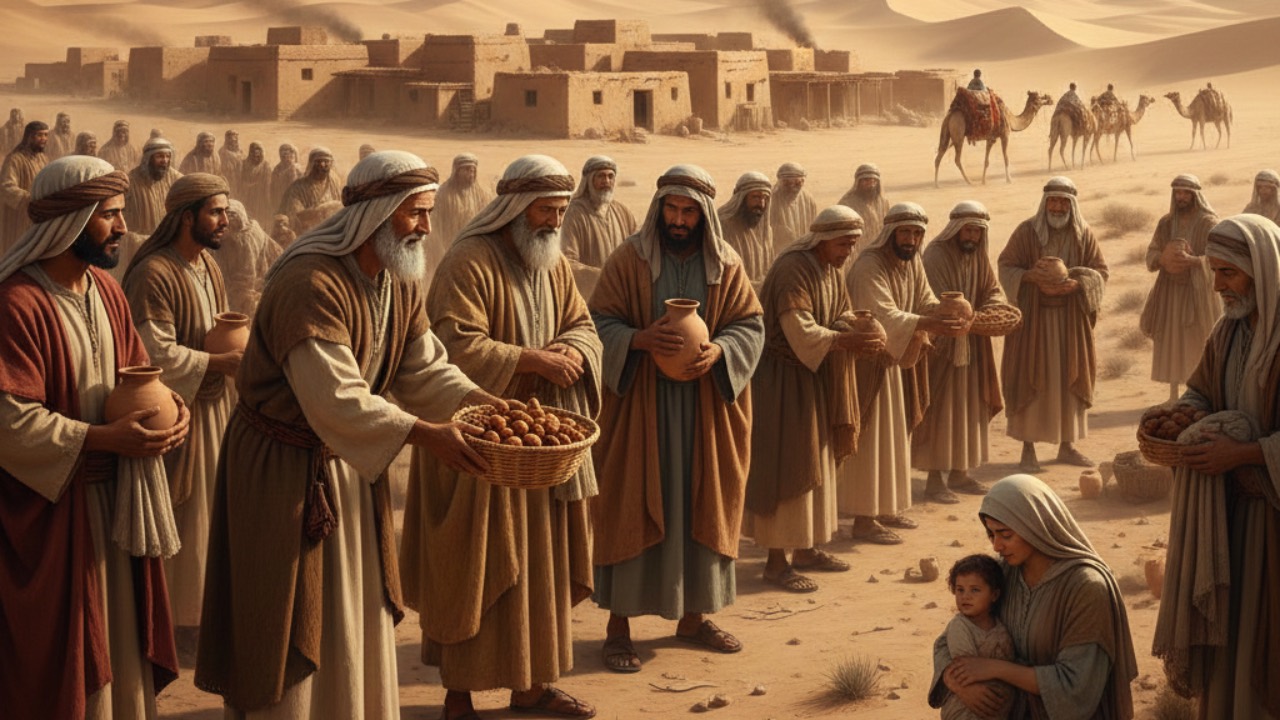
This pattern is not new. It mirrors the environment in which Muhammad first declared his message. Seventh-century Arabia was governed by a dominant tribal culture centred in Makkah, controlled by the Quraysh elite. This culture managed rituals at the Kaʿbah and maintained its authority by presenting its practices as “mainstream” Arabian pagan religion. The majority of Arabs participated passively, upholding inherited traditions without critical reflection.
When Muhammad proclaimed the Proclamation, explicitly calling for a return to Abraham’s covenant, he was not merely preaching monotheism. He was dismantling the cultural dominance of the Quraysh. Their response was telling, they branded reform as disruptive, socially divisive, and dangerous to the established order. His challenge was delegitimised through labelling and social pressure, not reasoned debate.
Ultimately, history vindicated the covenantal message. But this episode demonstrates that “mainstream religion” often reflects institutional dominance rather than truth. British Muslimness, with its entrenched folk-religious establishment and ethnic identity reproduces this very dynamic: it confuses social control with theological legitimacy, marginalising covenantal renewal as “sectarian” or “extreme,” just as the Quraysh once marginalised Muhammad.
Global Parallels and Institutional Entrenchment
The pattern extends across history:
-
In medieval Christianity, church reformers who sought to return to biblical foundations were branded heretical by clerical elites whose power depended on preserving inherited forms.
-
In rabbinic Judaism, prophets who called Israel back to covenantal fidelity were denounced for defying institutionalised religious authority.
-
In modern Muslim societies, state-backed clerical establishments define “orthodoxy” in ways that maintain monarchical stability rather than theological integrity.
Modern British Islam is part of this continuum. Its dominant culture silences correction not by answering it, but by redefining it as socially unacceptable.
Reframing Authority and Recovering the Covenant
Understanding the difference between dominant and majority culture allows British Muslims to see that the “mainstream” is not synonymous with truth. What they have is the product of a historically contingent cultural formation: an agrarian immigrant order that gained institutional power and now uses rhetorical tools. We must therefore proceed by exposing this conflation. It must show that:
-
The dominant culture is culturally contingent, not divinely mandated.
-
The majority of British Muslims are not ideologically loyal to it but passively conform out of social convenience.
-
Labelling mechanisms such as “sectarian” and “cultish” are strategies of social control, not genuine rebuttals.
Once these mechanisms are unmasked, it becomes possible to introduce the Ishmaelite covenantal tradition as the authentic centre of the Proclamation’s message rather than an alleged fringe project.
Conclusion
Modern British Islam is defined not by the faith of the majority but by the dominance of an agrarian, immigrant folk culture that has captured religious institutions and conflated its own parochialism with orthodoxy. This dominance is maintained by silencing theological reform through labels that cast covenantal renewal as socially deviant rather than scripturally sound.
Historical and global parallels, from Muhammad’s challenge to Makkan tribal religion to reform movements in Judaism and Christianity, demonstrate that this is a recurring feature of institutional religion. If British Muslims are to recover the covenantal message of the Proclamation (Qur'an), they must learn to distinguish between institutional dominance and truth, rejecting the false equation of “mainstream” with legitimacy.
Only by dismantling this conflation can the sincere Muslim faithful move from inherited folk religion to a living tradition of Abrahamic restoration.

Responses