
Recognising Leaders
God has not distributed anything equally. Cognitive ability, money, emotional resilience, physical strength, artistic taste, political instinct - you name it. God's Proclamation repeats that He “raises some above others in levels” so that He may test every person in what they’ve been given (Q 6:165). It’s basic anthropology. The Tanakh says the same: “For the Lord gives wisdom, from His mouth come knowledge and understanding” (Proverbs 2). Both messages assume asymmetry. Not everyone is built the same. Some inherit more, some inherit less. That is the architecture of humanity.
You see evidence of that asymmetry everywhere. Most people don’t have high-functioning cognitive abilities any more than they have exceptional physical strength or financial resources. Less than one percent of males can do ten clean pull-ups or bench 100kg. The average salary in the UK hovers around £40k. It is the coding of the universe.
The trouble begins when people pretend this inequality doesn’t exist because once you ignore it, you miss the next step: when a person lacks a certain capacity, they often cannot recognise that capacity in someone else. It's hard to recognise mastery when you’ve never tasted it. A GCSE-level violinist hears a world-class soloist and thinks, “Yeah, that sounds good.” Someone who’s never trained sees an 80kg bench press and a 150kg bench press and says, “Both are strong.” The same applies to intelligence, strategic sense, political instinct, or depth of insight. Shallow thinking assumes depth is “overcomplicating things.” You cannot recognise what your inner world has no frame for.
This is why the whole “Where are the leaders?” question becomes a little tragic, almost funny - as if potential leaders are hiding behind a curtain waiting to be summoned. The real question is: would you even recognise a leader if he was sitting right in front of you? History says no. God’s case studies say no. Psychology says no. Most people reject a leader long before they realise they’ve done so.
The Israelites in the age of Saul (Tālūt) petitioned the Prophet Samuel for a leader to unify them, restore dignity, and stabilise their situation. But the moment God appointed Saul, they rejected him since his qualities weren’t the ones their cultural frame taught them to value. They expected aristocratic lineage and visible wealth and undervalued strategy, stature, and knowledge, all of which the situation demanded. The final Proclamation captures the moment:
(Samuel said) “God has now appointed Saul to be your king.”
They Israelites said, “How can he be king over us when we have more right to kingship than he does? He does not even have much wealth.”
Samuel replied, “God has chosen him above you, and increased him greatly in knowledge and physical stature. God grants His authority to whomever He wills.” (Q 2:247)
This is human psychology in its purest form: envy dressed as principle, insecurity dressed as “standards”, pride dressed as critical thinking. This is exactly where psychology helps. When someone feels inadequate (consciously or not) they protect their ego through predictable defence mechanisms:
-
Denial of superiority
Instead of acknowledging another person’s abilities, the insecure person simply denies they exist. “He’s not better than me!” becomes a shield against reality. -
Narcissistic injury
When someone shines too brightly, it exposes the shadows in others. It creates an illegitimate feeling of smallness or irrelevance. The fragile ego cannot tolerate this, so it attacks the source. “That person? A leader? Nah, he/she’s nothing.” -
Cognitive dissonance
If someone has no intention of leading, or has no plan, no courage, or no competence but still wants to believe they are “special,” then they must dismiss anyone who actually demonstrates leadership. Accepting a real leader would break their self-image so they reject the leader instead.
This insecurity fuels almost every rejection of leadership in God’s case studies. Korah (Qārūn) couldn’t recognise Moses’ legitimacy because Moses’ rise wounded his pride. He framed it as politics, but scripture reveals that the real issue was envy masquerading as principle. His wealth made him assume leadership belonged to him, so God’s choice offended him. Jesus came with clarity, depth, signs, and extraordinary moral courage, yet the very Israelite leaders crying for a Messiah could not recognise him. Their insecurity about losing status made them blind. The Gospel’s description “He came to His own, and His own received Him not” captures the psychology perfectly. Makkah's Ishmaelite elite rejected Muhammad for the same reason. “He’s not better than us.” “He’s not wealthy.” “He’s just like us.” It was exactly the same script but different century.
God’s pattern never changes because human insecurity never seems to change. That’s why He repeatedly warns: “Do not follow those whose hearts We have made heedless.” (Q 18:28) Heedlessness isn’t stupidity, it’s ego masquerading as rationality.
Leadership is a skill, not a moral ranking
Another point people get wrong is conflating leadership with moral virtue. Leadership is not a moral ranking, so sincere people have little reason to get fragile. A deeply righteous person may be a terrible leader and a morally questionable person may be an excellent leader. Leadership is its own craft - an art and a science that covers:
- strategy
- vision
- emotional radar
- instinct for timing
- courage under pressure
- the ability to hold a line when everyone else collapses
Neither are all styles of leadership always relevant. God's Decrees distinguish between Saul, David, and Solomon because each was suited to a different phase. Saul was the transitional warrior. David was the nation-builder. Solomon was the institutionaliser. God appoints different leaders for different contexts, so expecting one archetype is childish. Nations collapse when they fail to recognise all of this. Every community that declines repeats the same pattern:
- they stop recognising intelligence
- they stop recognising courage
- they stop recognising integrity
- they elevate whoever mirrors their insecurities back at them
- they stagnate
- they blame God
Yet God never leaves sincere people without resources. He gives intellect, case studies, guidance, reminders, exemplars. The bottleneck is never divine, it is always internal.
“God does not change the condition of a people until they change what is within themselves.” (Q 13:11)
The intelligent, the leaders, and the saboteurs
After the battle of Hunayn when some of the Yathribite Ansār (Helpers) felt overlooked because the final Prophet distributed most of the spoils to the newer Makkans to win over their hearts, news of their sentiment reached him, so he gathered the Ansar privately. He said: “People of the Ansar, what is this statement that has reached me from you?!” They replied, “As for those of intelligent counsel and the leaders, none of them said anything. It was only some of our younger ones who said something.” Hence, if you can’t recognise your intelligent advisors and your leaders from your saboteurs, then:
- you will drift
- you will circle the runway
- you will sit in mediocrity
- you will recycle the same chaos
- you will call dysfunction “destiny”
- you will treat stagnation as fate
- you will pray for rain and then curse the clouds
As we know, people ask God for guidance, then crucify or silence the guides. They ask for solutions, then reject the people who carry them. They pray for restoration, then sabotage the restorers. But it's not all grim. God also shows us what it looks like when communities get it right. It’s rare, but when it happens, it’s transformative.
-
David’s small band: recognising leadership before it’s fashionable
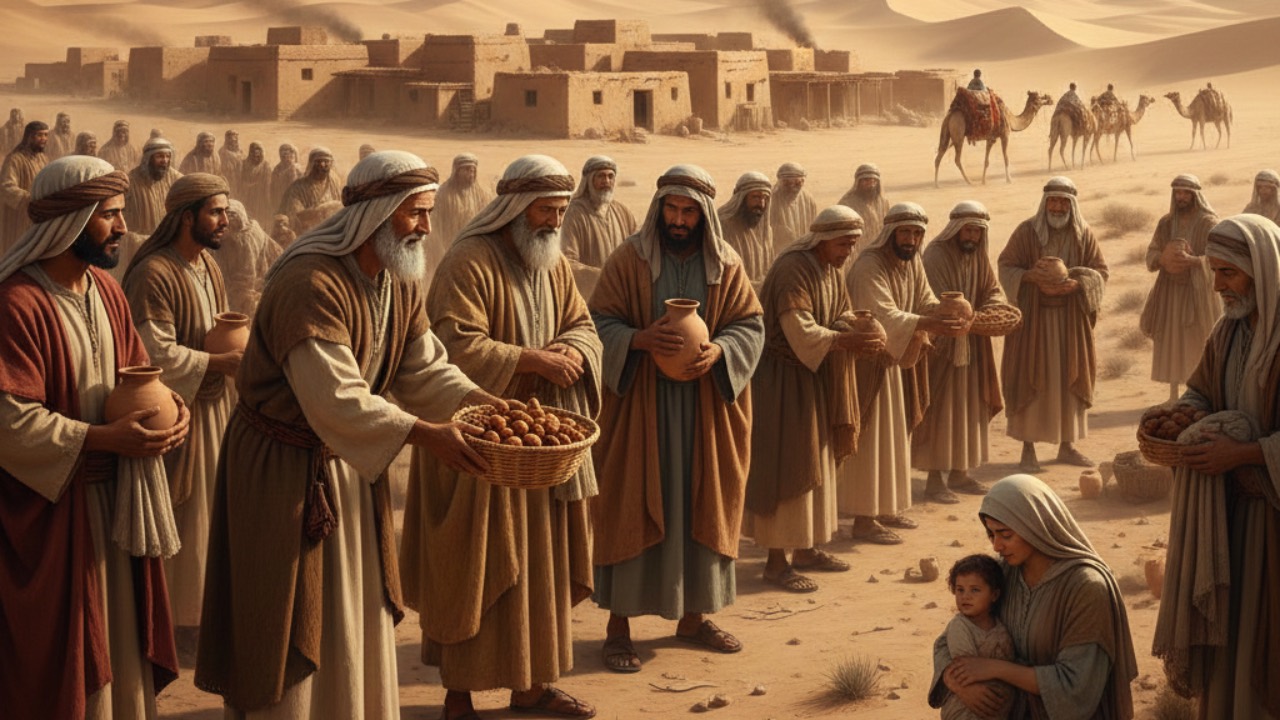
Before David became king, he was a fugitive. Yet a small group of men gathered around him — “the distressed, the discontented, and the indebted” (1 Samuel 22). Not elites. Not scholars. Not noblemen. But they had humility and perceptiveness. They saw what the powerful couldn’t. They sensed the future God had placed in front of them. Because they weren’t threatened by his qualities, they became the nucleus of Israel’s greatest kingdom. -
The Ansar of Yathrib: radical humility and covenantal clarity
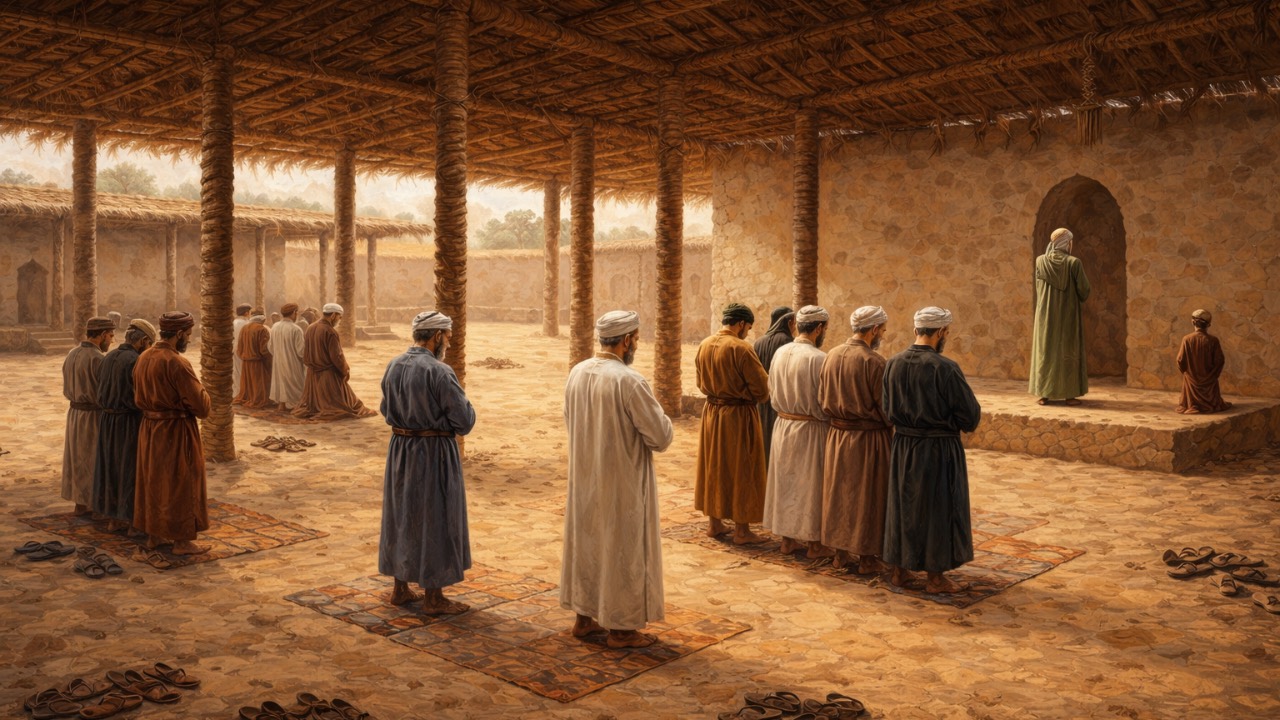
When Muhammad arrived, the Ansar didn’t say, “Why him? We’re older, more established, more connected.” They did something extraordinary: they recognised a leader without fragility. Their humility became their honour. And because of that, their small city leapfrogged centuries of stagnation in a few years. -
The Covenant Assemblies: small groups, high clarity
Every revival in the Tanakh starts with a tiny core that holds on to clarity when the crowd dissolves into noise. The remnant with Hezekiah, the companions of Gideon, the small groups who rebuilt the covenant after periods of fasād — all shared the same trait: discernment. They didn’t need popularity or consensus. They saw early. They understood early. They moved early.
When you put all successful covenantal communities side by side, four traits appear every time, almost like a divine signature:
-
Real humility
Not performative modesty, but actual recognition that “this person has qualities I do not.” -
The ability to submit to wisdom
Submission to wisdom is recognition. When someone sees further, the wise accompany them. Not grudgingly, but gratefully and in high spirits. -
Courage to break from the crowd
Every crowd in scripture gets it wrong: Noah, Moses, David, Jesus, Muhammad, and victory always comes through the small few. -
Refusal to let insecurity dictate perception
Insecurity blinds and sabotages. The moment a community stops letting insecurity decide who they trust or appoint, everything changes.
So God always provides solutions. He always sends clarity. He always raises capable people. The issue is never divine silence, but human insecurity. Those who can reshape history recognise the people God places in their path - even when those people haven't recognised it themselves. Those who cannot, wander until they disappear.


Responses