Symbolic belief
This critique touches on a profound and necessary tension within the modern phenomenon called "Islam" that has become a system of symbolic belief that is abstract, imaginal, and socially performative and stands in contrast to the revelatory intent of the Proclamation (Qur’an) and the covenantal continuity it sought to restore through Muhammad.
Slavoj Žižek speaks to the idea, that in symbolic belief, that one does not need to have faith in God but merely to act as though one believes through symbols, rituals, and inherited cultural forms. Hence, the core of belief becomes externalised. People may not believe the content of revelation in a conscious or rational way, but they believe through others (e.g. “my imam believes,” “the scholars have said,” “we have always done this”).
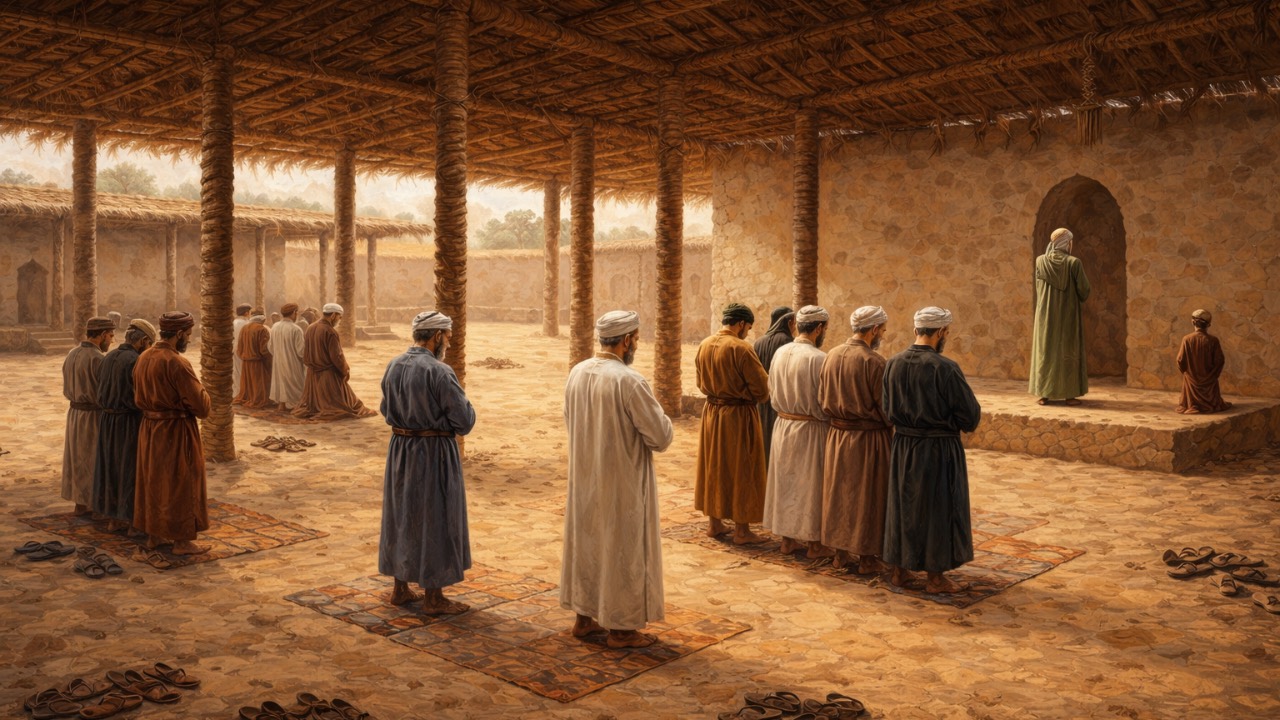
Symbolic belief sustains itself not through conviction or critical thought, but through repetition and ritualised identity. It is the domain of dress codes, formulas, sanctified architecture, and the sanctification of words devoid of comprehension, such as rehearsing Arabic sounds that are never understood.
Modern Islam, as distinct from the original Abrahamic tradition, has increasingly functioned as a religion of symbolic performance. Ritual acts are observed with extreme precision, yet without meaningful consequence. Recitation of the Qur’an is performed with melodious perfection while its message is neither grasped nor enacted. Legal codes are treated as static templates to be imposed rather than as evolving articulations of God’s justice contextualised through covenantal ethics. God warned against this descent. He criticised previous communities for “taking their priests and rabbis as lords besides God” (Qur’an 9:31), and for carrying the Torah but not applying it: “like donkeys carrying books" (Qur’an 62:5). Yet a similar fate has befallen those who inherited the Decree. Its message became phonemised and reduced to sounds, divorced from substance.
The ultimate paradox lies in the theological irony that Muhammad, appointed by El’Lāh to restore the tradition of Abraham, is severed from that very tradition in the symbolic construction of Islam. In the Proclamation, Muhammad is not the founder of a new religion. He is described explicitly as following the tradition of Abraham (Qur’an 16:123) and nothing but a warner like those who came before (Qur’an 41:43). Yet modern Muslims largely see him through a sectarian and mythical lens as a miraculous figure rather than a messenger of law and reformer of Abraham’s descendants, as the founder of a religion called “Islam” rather than the final restorer of the covenant of Abraham and covenantal submission to God, and as a cultural totem venerated through poetry, folklore, and metaphysical claims in ways that undermine the core message he brought. In doing so, the symbolic version of Muhammad replaces the real one, a great individual one who challenged unjust power, purified the House of Abraham from idols (both physical and ideological), and called people to the justice and the sovereignty of God.
This transformation from message to myth, from covenantal law to legalism, from moral agency to ritual identity is the hallmark of symbolic belief. It preserves the aesthetic of submission for ethno-cultural continuity but hollows out its substance.
Thus the Qiblah (Direction) is turned to mechanically, but the Ancient House it points to which is the legacy of Abraham’s covenant is rarely understood. The Shahādah (testification of God’s sovereignty) is repeated endlessly but the idea that no authority can rival God’s is voided by obedience to political, clerical, or sectarian power. Muhammad is praised with flowery blessings, but his role as the seal of the Prophets meaning the finaliser of 2000 years of Abrahamic revelation and the completion of our codified law is almost never understood on its covenantal terms.
The dislocation of Muhammad from Abraham and of Muslims from the Abrahamic heritage is not a mistake of history. It is the consequence of turning submission to God as covenantal adherence into a religious identity structure (credibly explained through imperial religion, medieval conformity and European colonisation). A structure that feeds on symbols but forgets the very realities those symbols were meant to signify.
What began as a call to revive the covenant of Abraham became, ironically, another religion that mythologised its Prophet and obscured the law of God. It becomes the very thing God criticises in the Jews and Christians:
“but they have split their (Abrahamic) affair into religions, each rejoicing in their own. (Qur’an 23:53)
Unless a new generation reclaims substantive faith rooted in revelation, reason, and responsibility, it will continue to happen again.
"My covenant does not include the wrongdoers." (Qur’an 2:124)
Spoken to Abraham himself, it remains a warning to all who distort the covenantal code in favour of inherited systems, even if those systems draw on his tradition.


Responses