
The Colonial Manufacture of “Islam” and the Erasure of the Abrahamic Legacy
Western colonialism was not merely like former world empires. The British carved artificial borders in Africa and South Asia and embedded categories like “Hindu” and “Muslim” into law, fixing identities that served imperial control. The French tore apart North Africa and the Levant, casting covenantal memory as folklore beneath their secular creed. The Belgians turned the Congo into a death camp, dismissing African religiosity as “fetishism.” The Spanish and Portuguese annihilated the Americas, replacing Abraham’s covenant with a totalising Catholic order. The Italians tried to resurrect Rome through concentration camps in Libya and poison gas in Ethiopia, branding covenantal loyalty as tribal fanaticism. Everywhere, massacre and rape was sanctified as civilisation, theft as trade, and erasure as enlightenment.
The most devastating conquest, however, was ideological. Colonialism redefined the restoration of Abraham’s code and its greatest threat into a bounded “Islamic religion.” Britain reframed submission as “Mohammedanism,” France made faith a private “religion,” Spain and Portugal erased covenantal universality under Catholicism, and Italy demonised it as tribalism. The result was the same: a universal covenant was provincialised, Christianity enthroned as civilisation’s heir, and later Zionism became poised to claim the mantle.
From Covenant to Religion
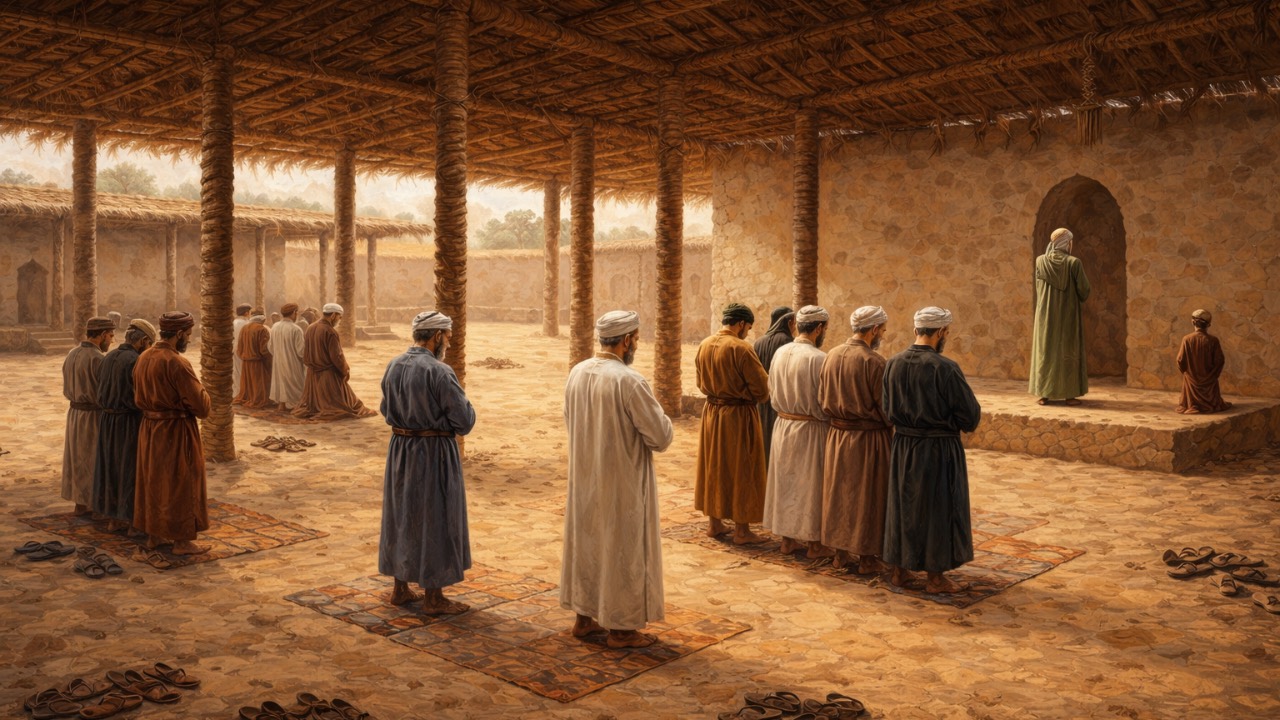
For a millenium, those who followed the final Proclamation understood themselves not as the adherents of a new religion, but as the restorers of an old tradition: the primordial covenant of Abraham. This identity was not tied to ethnicity, language, or geography but to covenantal submission to El’Lāh by people who wanted good for humanity. It was a 4000 year inheritance, continuously renewed through Prophets, culminating in the final Messenger.
Colonial rule could not tolerate this universality amongst the good and decent peoples of Earth, it threatened the preservation of the corrupt elite. If the Ishmaelite covenant remained visible as the Abrahamic restoration, it would undermine the West’s imperial Christianity (far removed from the Israelite Messiah's legacy), which had to remain the sole “civilisational faith.” The solution was to provincialise and reduce the covenant to an Arab and South Asian "religion" - to recast it as a 1400 year old Muhammadan tradition, one faith among others, subordinate to Roman Christianity (which was eventually displaced by Zionist Jews).
The Weaponisation of Language
This was not just a theological project but also a linguistic one. Western colonial powers reshaped vocabulary and altered its Abrahamic vernacular to reframe an entire civilisation. The erasure began with language. The colonisers renamed the covenantal restorations via the Ishmaelites as “Mohammedanism,” as though it were a cult devoted to one man and in his service. Its adherents became “Mohammedans” or “Musalmans,” ethnic categories rather than covenantal servants of God. Even when “Islam” replaced “Mohammedanism” in scholarly usage, it had already been fixed in the Western mind as a world religion alongside Christianity and Judaism, rather than the Abrahamic code restored.
Colonial dictionaries, census forms, missionary writings, and administrative categories reinforced this terminology. As English became the global lingua franca, the colonial lexicon and manufactured vernacular hardened into permanence. People no longer thought in covenantal terms. They thought in colonial ones.
Messaging and Vernacular Control
But it was never just about words. It was about messaging and meaning. The entire vernacular of the tradition was reframed away from Abrahamic discourse. The Qurʾān was translated and taught as the holy book of a distinct “Islam,” parallel to the Bible but provincial and foreign. George Sale’s 1734 Preliminary Discourse framed it explicitly as the scripture of a new sect founded by Muhammad. Later colonial Urdu translations in India carried the same logic: “Islam” as a religion, “Muslims” as a people, “Mohammedan law” as their legal system.
This lens seeped into modern study of the medieval scholarly tradition itself. Classical works of law, theology, and history which had been written in the language of 'understanding the covenantal law' (fiqh), 'God's sovereignty' (tawhīd), and 'Abrahamic covenant' (al-'ahd wa mīthāq) were reinterpreted through colonial categories. Fiqh became “Islamic jurisprudence,” theology became “Mohammedan dogma,” and history became a mythologised and monolothic “Muslim civilisation.” None of these categories existed in the pre-colonial imagination, yet the colonised themselves began to employ them.
Even apologetics shifted. Colonised scholars defending the tradition no longer spoke covenantally. Instead, they explained “Islam” in terms the colonisers could tolerate, reinforcing the colonial frame. Continuing into today, they guard this false inheritance, mistaking it for authenticity, and resisting any attempt to restore the covenantal Abrahamic identity that once defined the tradition.
Internalisation and Resistance to Covenant
The tragedy was not just adoption, but pride. Movements like the Deobandis and Brelvis in South Asia embraced their new identity as “Musalmans.” They raised generations to defend it, thinking they were preserving authenticity when in fact they were preserving colonial categories. The tragedy deepened when the subjugated themselves adopted these categories. Deobandis and Brelvis in South Asia began to take pride in their colonial-era “Islam,” defending “Musalman” identity as though it were native. They built institutions, wrote polemics, and raised generations in the very terminology designed to emasculate them.
But it goes further still. The colonised do not simply adopt the language; they actively resist any attempt to return to the Abrahamic frame. When confronted with the covenantal identity, the Ishmaelite restoration of Abraham’s tradition, the colonised dismiss it. Some of the weak minded claim it as perennialism which collapses all faiths into vague universals whereas God's decrees explicitly refer to the universality of one tradition. Others accuse it of imitating Christianity or Judaism because it remains unfamiliar to their ethnic culture. In their colonised minds, the very claim to universality sounds foreign because the coloniser has bounded their ethno-religious identity. This is the psychological depth of subjugation: when people no longer merely forget their inheritance but actively defend the chains that erased it.
Salafism, which appeared as a purist call to return to the early generations, failed to escape the colonial paradigm. Arabic discourse was quickly funneled into the colonial vernacular already entrenched in the English language. In Britain (and other places in the West), Salafis became entangled in the same old South Asian disputes (Ahl-e Hadith against Deobandis and Brelvis) because the categories of Musalmanism had already set the stage. It too fought on colonial terms and so it remained bound by them. Far from reorienting people back to the Abrahamic covenant, Salafism reinforced the colonial scaffolding by fighting on its terms and adopting modern Arab nativism.
If Salafism collapsed into the colonial construct by translating itself into the existing categories of “Musalmanism,” Sufism fared little better. On the surface, Sufi movements often styled themselves as a form of resistance by turning to spirituality, folk practices, and ethnic traditions as a way of standing apart from the secular modernity of the West. Yet in reality, this too was trapped within the colonial paradigm.
Sufism, under colonial rule, became a modernised form of folk religion: shrines, cults of saints, local rituals, and ethnic nativism dressed up as authenticity. The very fact that these practices differed from Western secular rationality was taken as proof of their truth. This was not covenantal restoration but reactive nativism. Instead of returning to the Abrahamic code, Sufism turned inward to local customs, assuming that whatever was indigenous must therefore be sacred, yet this played directly into colonial categories. The West had already set up a binary: the “rational” modern West versus the “backwards” Orient steeped in superstition and cults. By embracing folk religion as resistance, Sufi movements inadvertently confirmed the colonial narrative and accepted the frame that their tradition was not the Abrahamic restoration but a set of colourful, irrational (or to make it sound better, "suprarational") practices.
In this sense, Sufi “resistance” is as imprisoned in the colonial construct as Salafi “purism.” Salafism tried to prove itself rational and authentic within the boundaries of “Islam” while Sufism tried to prove itself authentic by embracing precisely what the coloniser defined as irrational. Neither reorients people back to the covenantal core, both trapped reacting to the West’s categories and never transcending them. The result is that Sufism, like Salafism, helps consolidate the colonial scaffolding. Instead of preserving the universality of the Ishmaelite covenant, it reduces the tradition further into ethnic folk cults that the coloniser can safely tolerate as “local colour” and further removed from the Ishmaelite legacy, all the while dismissing them as proof of the West’s superiority.
Zionist Appropriation
In the past 60 years, the Zionist project perfected what colonial Christianity had begun. By fusing Jewish nationalism with biblical promise, Zionists convinced much of the modern West and its Christians that covenantal loyalty required allegiance to Israel. They did this by biblically positioning themselves as God's "chosen people" who are apparently persecuted for their covenantal fidelity, and thus a nation that ought to be blessed by Christians. What had once been the mantle of the Ishmaelite legacy was now claimed by a nationalist state controlling Christian (mostly American) minds, with the new colonial religion of Islam actively abandoning the mantle. Abraham’s promise was reframed as land possession and ethnic supremacy, and Christians were hoodwinked by Jews into accepting it as divine mandate.
Reading the Qurʾān Through Colonial Eyes
The ultimate effect of this colonisation is that the Qurʾān itself, the Proclamation of God, is now read through a colonial lens. Instead of encountering covenantal restoration, readers look for “Islam.” Every English translation, commentary, and apologetic tract is infected by the vernacular of empire. 'Being wholly submissive to God by adhering to the covenantal code', which is what God was contextually talking about when simply referring to "complete submission" or the Arabic verbal noun "islām", has been transformed into a "religion." The Ishmaelite covenant has been transformed into a Muhammadan faith and this distortion is now so normalised that even the colonised defend it as sacred tradition!
Conclusion
Western colonialism was uniquely destructive not because it conquered land, but because it conquered imagination. It reduced the Abrahamic covenant to a provincial "religion", rewrote its vocabulary, altered its vernacular, reframed its scripture, and reshaped its adherents’ own self-understanding. The colonised not only internalised this distortion but took pride in it, resisting any attempt to recover their covenantal identity.
This is why today, when someone hears “Islam,” they think not of the Abrahamic covenant but of a religion like Christianity or Judaism. Indeed, most western Muslims hold Abraham to be a Jew. The colonial victory lies precisely here: the covenantal restoration has been linguistically and mentally erased, leaving in its place a domesticated "religion" that fits neatly into the categories of Western hegemony.
This is the real legacy of empire. Not just railways, plantations, or stolen wealth, but a stolen memory: a 4000 year covenantal code buried under the rubble of “Islam,” and a world brainwashed to believe the rubble is the whole story.


Responses