
The Myth of Europe
In this newsletter, we’re addressing the so-called ‘myth of Europe’, a thoroughly modern fabrication that presents Europe as a single, continuous, and inherently Christian civilisation which supposedly stepped neatly into Rome’s sandals after the fifth-century collapse and then, with impressive composure, wandered its way into the present! Coupled with remarkably confident but fictitious geographical assumptions, this narrative disguises ideology as common sense with its appeal resting less on accuracy than on emotional reassurance and political convenience for White Nationalists and assorted civilisational nostalgists. My hope is that by the end, it becomes clear that this story is not an ancient inheritance at all, but a colonial construction that we need to be fully aware of.
Post-Roman Empire
When the Western Roman Empire disintegrated in the late fourth and fifth centuries, there was no coherent ‘Europe’ patiently waiting in the wings to inherit Rome’s authority. What followed instead, from roughly the late fourth to the eighth century, was a long and unstable transition in which authority, identity, law, religion, and culture were renegotiated in uneven and improvised ways across the western hinterland of the Mediterranean world, that is, the former Roman space. Rome didn't give birth to Europe. It left a vacuum, and as history reliably demonstrates, vacuums invite movement, competition, and reinvention. That restless process, rather than any made up civilisational continuity, defines the post-Roman history of the western Eurasian peninsula, which, incidentally, is not a continent in any meaningful geological sense (it's a peninsula).
Even before its collapse, the Roman world had never covered what is now casually labelled 'Europe'. From the first century BCE through to the third century CE, Roman authority remained largely confined to the Mediterranean basin and stopped at defensible northern frontiers such as the Rhine and the Danube. Beyond these boundaries, Roman writers dismissively termed the northern peoples barbaricum, a vast and diverse non-Roman world whose populations had never been Romanised in any substantive sense. This included Germanic groups such as the Franks along the lower Rhine, the Saxons in northern Germany and later Britain, the Goths moving between the Baltic and Black Seas, and the Lombards from the Elbe region. Celtic populations persisted on the imperial fringes in Ireland, northern Britain, and parts of Gaul and Iberia, while the ancestors of the later Vikings inhabited Scandinavia in Iron Age societies shaped by maritime exchange.
What replaced Rome between the fifth and seventh centuries was not a successor civilisation but a patchwork of regional kingdoms, all differing in political structure, cultural practice, and religious development. The Franks consolidated power in Gaul during the late fifth and sixth centuries, the Visigoths ruled Iberia from the early fifth until the early eighth, and the Lombards entered Italy in the late sixth century, reshaping its political landscape in the process. These entities were not ‘European states’ in any civilisational sense, nor did they imagine themselves as such. They were post-Roman polities ruling predominantly Roman populations through unstable arrangements, scavenging fragments of Roman law, grafting them onto local custom, and overlaying them with divergent forms of Jesus' messianic legacy and still evolving forms of early Christianity. Authority rested not on inherited civilisation but on negotiation, adaptation, and selective reuse in a world where imperial unity had already collapsed.
Modern assumptions about Christianity do little to clarify this period. Between the fourth and seventh centuries, the traditions that today are gathered under a 'Christian' label were neither unified nor dominant in the way subsequent centuries conveniently projected backwards. Latin Christianity in the western kingdoms differed sharply from eastern forms centred on the imperial east, and both were internally divided over authority, orthodoxy, and practice. Moreover, among most early-converted Germanic elites, including the Visigoths, Ostrogoths, Vandals, Burgundians, and Suebi (the Franks being an exception), the Christianity we speak of today actually arrived in Arian form through frontier missionary networks rather than imperial councils, providing a usable identity without submission to Roman ecclesiastical authority. Arianism was a unitarian monotheistic tradition that, in contrast to Nicene Christianity, emphasised the supremacy of God and subordiantion of Jesus, which meant that when Germanic peoples across the peninsula encountered the Ishmaelite tradition through the Umayyads and the Berbers, the covenantal sensibility they met appeared very familiar rather than alien. Both their beliefs and practices were similar. Thus, to speak of a ‘Christian Europe’ in the fifth, sixth, or even seventh century is therefore not merely inaccurate, but impressively anachronistic.
It is within this fractured post-Roman world that the Ishmaelite legacy also emerged on the peninsula, not as a late intruder into a settled Europe, but as a parallel civilisational force arising at the same historical moment. Muhammad, the final messenger of God and champion of the Abrahamic tradition, was born around 570, less than a century after the conventional end of the Western Roman Empire. Within decades of his passing in 632, Ishmaelite polities began reshaping the eastern and southern Mediterranean, the very heartlands of the former Roman world. This matters because the peninsula did not encounter the Ishmaelite legacy as a distant civilisation centuries later, but immediately, while post-Roman identities were still being formed. The Byzantine world was responding to the companions of the final Prophet at its doors while Western Christianity itself hadn't even been consolidated or institutionally formed. The point? The fully formed Ishmaelite legacy of the Abraham's tradition was established in 'Europe' before Western Christianity!
The ‘European’ legacy of Ishmaelite thought
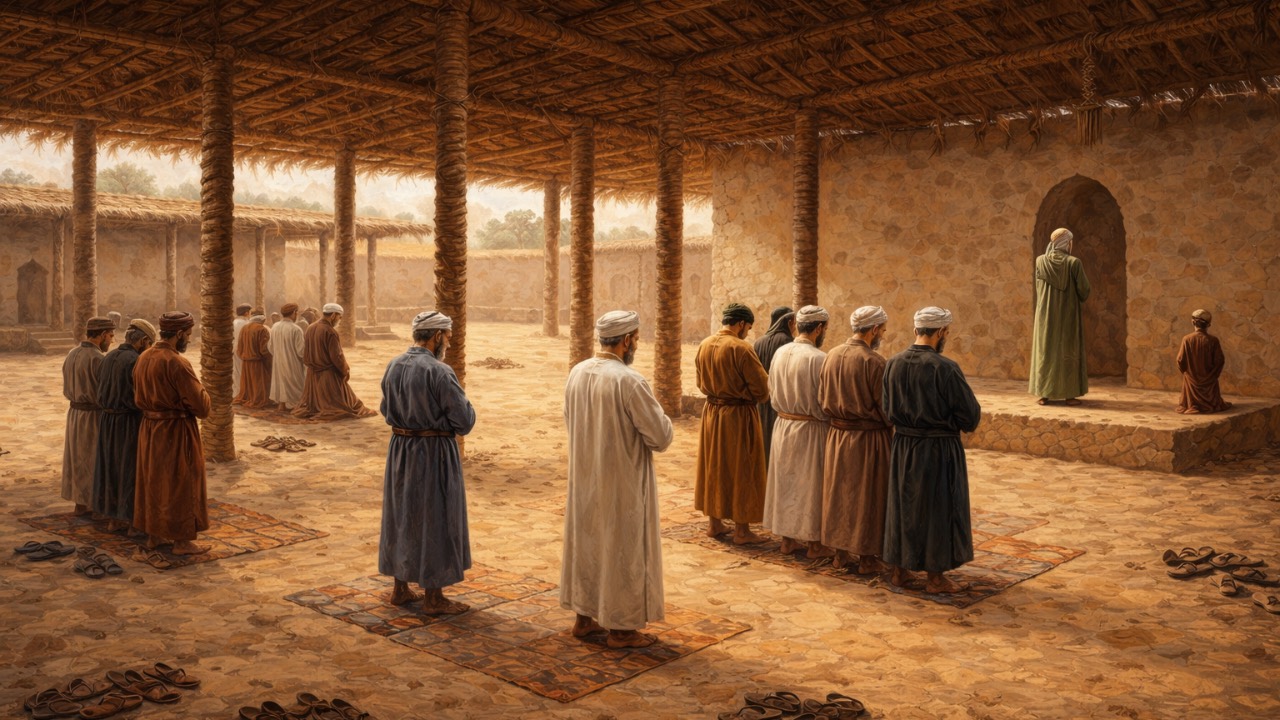
By the seventh century, under the Umayyad polity, Abrahamic rule as articulated through the Ishmaelite legacy extended across North Africa and into Iberia, culminating in the establishment of al-Andalūs in 711. From that point onward, substantial portions of what is now called Europe were governed by 'fully submissive' Abrahamic rulers who administered in Classical Arabic and integrated into intellectual, economic, and legal networks stretching from the Atlantic to Central Asia. Across the western peninsula, Latin, Greek, and Arabic functioned simultaneously as major languages of administration, scholarship, and elite culture.
This presence was neither marginal nor fleeting. In western regions of the peninsula it endured for centuries and coincided directly with the formative period of medieval development, shaping legal traditions, intellectual horizons, and administrative practices at a foundational level. The permeability of this world remains visible into the twelfth and early thirteenth centuries, when the Holy Roman Emperor Frederick II, raised in Sicily, spoke Arabic and governed through institutions inherited from earlier Ishmaelite rule. Norman and later rulers preserved Arabic geography, law, medicine, and statecraft not out of curiosity but because these systems worked. The presence of scholars such as al-Idrīsī, writing in Arabic for Roger II, makes clear that the Ishmaelite legacy was not external to Europe but operating at its political core. Sicily reveals that the peninsula’s medieval formation was Mediterranean before it was continental, and civilisationally Ishmaelite before it was Christian.
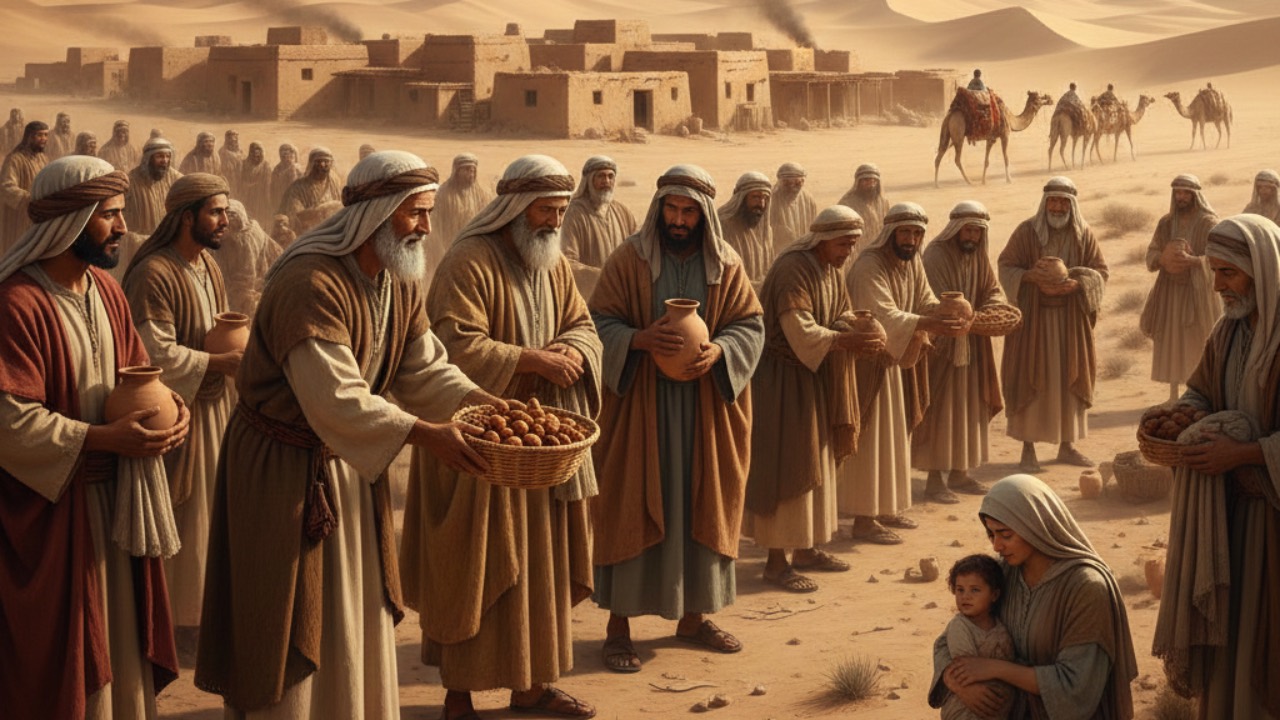
In the eastern regions of the Eurasian peninsula (Europe), the Ishmaelite legacy would later outlast and ultimately displace the Eastern Roman Empire, coming to dominate southeastern Eurasia between the fourteenth and nineteenth centuries through the Ottoman polity, reaching as far northwest as Vienna (today's Austria). This did not represent a sudden arrival at Europe’s gates as it is commonly portrayed by modern Europe, but the northern reach of a political reality that had shaped the peninsula for centuries. The Ottomans governed European lands long before that moment, from Bosnia and Albania to Greece and Bulgaria. Arabic functioned as the language of revelation and law, Ottoman Turkish as administration, and local languages as vernacular. This was not an ‘invasion of Europe’ in the modern nationalist imagination, but long-established European governance under an Ishmaelite order.
From al-Andalūs in 711, to Palermo in the twelfth century, from Constantinople to Vienna in the sixteenth and seventeenth, the peninsula’s history unfolds as a long, contested Abrahamic space shaped by shared ruins, shared institutions, and rival claims to moral and political order. Across both western and eastern regions, the Ishmaelite legacy (and Arianism) was not an interruption in European history but the principal conditions under which Europe was formed.
If we properly account for this legacy of Abrahamic restoration, it becomes clear that the Ishmaelite imprint in Europe runs so deep that some of the most widely read scholarly works in the world today were produced by scholars born, educated, and intellectually formed on what was later called European soil. Yahyā b. Yahyā al-Laythī (d. 848) carried Mālik’s Muwaṭṭaʾ from Madinah to Córdoba and established Mālik’s interpretive framework as the dominant legal tradition of al-Andalūs. Baqī b. Makhlad (817–889) studied with Aḥmad b. Ḥanbal and compiled his own vast Musnad that Ibn Hazm later praised as unmatched, and was credited with making al-Andalus the abode of hadith. Ibn ʿAbd al-Barr (978–1071) produced hadith works that remain standard references, reflecting a mature scholarly culture developed in Iberia, while his contemporary Ibn Hazm (994–1064) authored al-Muhallā, among the most sophisticated legal works of the medieval period.
Abū al-Walīd al-Bājī (1013–1081) and Ibn al-ʿArabī (1165–1240) exemplify the two-way scholarly traffic between western Eurasia and Near Eastern centres, while Ibn ʿAtiyya (1088–1147) laid the foundations of systematic exegesis of the final Proclamation in al-Andalūs. Al-Qurtubī (1214–1273) (“from Córdoba”) produced one of the most influential commentaries in the Ishmaelite tradition, and Abū Ishāq al-Shātibī (1320–1388), writing in fourteenth-century Granada under political contraction, articulated a sophisticated theory of the meta-objectives of covenantal law. Iberia was, by any honest measure, a European capital of hadith, exegesis, and legal philosophy.
Even this list, limited to covenantal disciplines, understates the scale of what is routinely excluded. Figures such as Ibn Rushd (1126–1198), al-Zahrāwī (936–1013), Ibn Bājjah (c. 1085–1138), Ibn Tufayl (c. 1105–1185), and al-Idrīsī (1100–1165) shaped philosophy, medicine, and geography, all civilisational knowledge which eventually spread across Latin-speaking kingdoms. What emerges is a vast ecosystem of civilisational knowledge that has been systematically edited out of Europe’s historical self-image.
The ‘foreigners’
Claims that the Ishmaelite legacy was an ‘external’ intrusion collapse once the myth of Europe itself is exposed. Furthermore, what's interesting is how the same isn't said of the Visigoths who were also foreigners, in fact everyone was. The Visigoths didn't originate in ‘Europe’ as it is imagined today, but migrated south under pressure from the Huns in 376, crossed the Danube, defeated a Roman emperor at Adrianople in 378, and moved through the Balkans, Italy, and Gaul before establishing rule in Iberia. Their trajectory, like that of the Franks, Lombards, and Ishmaelites, was one of movement, negotiation, and adaptation within a collapsing imperial system. Exposing the inherent fallacy of the claim, Ishmaelite expansion followed the same structural logic, entering a world already defined by instability rather than unity.
So what emerged between the eighth and twelfth centuries was not succession but co-presence. From Iberia to Sicily, from Mediterranean coastlines to centres of translation and learning, Ishmaelite polities were not peripheral but constituted the forming of later Europe. Philosophy, medicine, mathematics, exegesis, legal reasoning, and administrative knowledge flowed through Arabic-speaking kingdoms into Latin ones precisely when Latin polities lacked the institutional capacity to generate such civilisational knowledge independently.
A unified Christian Europe didn't exist (neither religiously nor politically) nor did the Ishmaelite legacy momentarily 'invade' a Christian Europe. They competed and co-existed from the beginning: borrowing and defining themselves in relation to one another.
Why the myth survives
The myth of ‘Europe’ survives because later centuries, particularly those shaped by colonial empire and nationalist ideology from the eighteenth century onward, required a clean, linear, and morally flattering origin story. A Christian Europe descending directly from Rome provided the perfect historical varnish, allowing domination abroad and hierarchy at home to present themselves as inheritance. By framing Europe as ancient, unified, and civilisationally Christian, violence could be rebranded as destiny, exclusion as continuity, and inequality as order. Acknowledging instead that the peninsula emerged from plurality, migration, contestation, and sustained Abrahamic entanglement would have been rather inconvenient.
The deeper truth is less comfortable but harder to escape. ‘Europe’ is not a civilisational essence but a retrospective argument projected onto a far messier past. What we see today is not the culmination of an ancient identity but a moment in the long and uneven history of this western Eurasian peninsula. When the Roman world fractured between the fifth and eighth centuries, multiple traditions stepped into the same ruins. Fragmented Christian variants and the fully formed Ishmaelite legacy responded to the same post-imperial vacuum and were present from the very beginning of Europe’s medieval formation.
Seen clearly, a coherent Ishmaelite legacy has been present in this peninsula for longer than any unified form of Christianity. Christianity itself required centuries to stabilise doctrinally, institutionally, and politically, while the Ishmaelite tradition emerged rapidly as a civilisational order with law, language, governance, and moral coherence. Europe did not precede this encounter but emerged through it. What later generations mythologised as a singular Christian civilisation was in reality the product of a long, uneasy, and creative entanglement between competing traditions inhabiting the same geographic space.
Ultimately, despite how European colonisers framed the story, the peninsula now called Europe intrinsically belongs to no one but God. It was never the exclusive possession of a people, a group, or a civilisation. As Moses reminded the Israelites, and as Muhammad declared to Musaylimah the Liar, sovereignty over land is not claimed through lineage, race, or conquest, but granted by God alone:
The earth belongs to God. He gives it as their own to whichever of His subjects He chooses, and the future belongs to those who are loyal to Him. (Q 7:128)


Responses