
The Religious Inheritance Illusion
Most Muslims talk about “Islam” as if it were a single unbroken beam of light, shining cleanly from Muhammad in 7th century Arabia into the 21st century, untouched by history. Christians do something very similar with “Christianity” and Jesus. In both cases, an entire mountain range of imperial politics, cultural change, philosophical translation, and colonial exploits gets flattened into a cartoon of seamless continuity.
Islam today, as a Musalman religion, is no more a direct and transparent expression of what Muhammad was doing than contemporary Western Christianity is a direct expression of what Jesus was doing. The Ishmaelite and Nazarene legacies have been stretched, carved, and reassembled many times. Let me unpack that in stages.
1. The original Ishmaelite appointment: what was actually happening
If you strip back the later layers and look at Muhammad’s community historically, several things stand out.
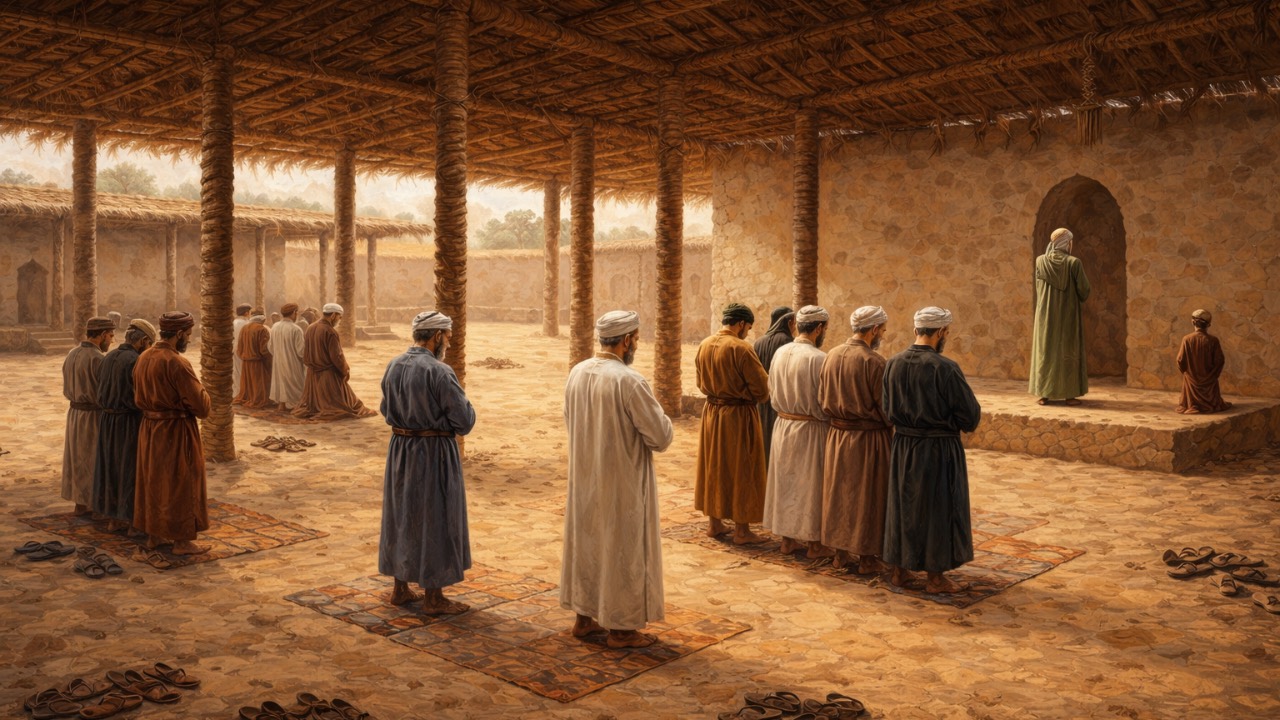
Firstly, it was a covenantal movement, not a “religion.” Muhammad is not founding “Islam” in the modern sense of a branded religion. He is summoning people back to the primordial covenant with El’Lāh (the One to serve), the God of Abraham, Ishmael and Isaac within a concrete social world. The Proclamation (al-Qur'ān) is an update and clarification of an already existing code, not the invention of a new one.
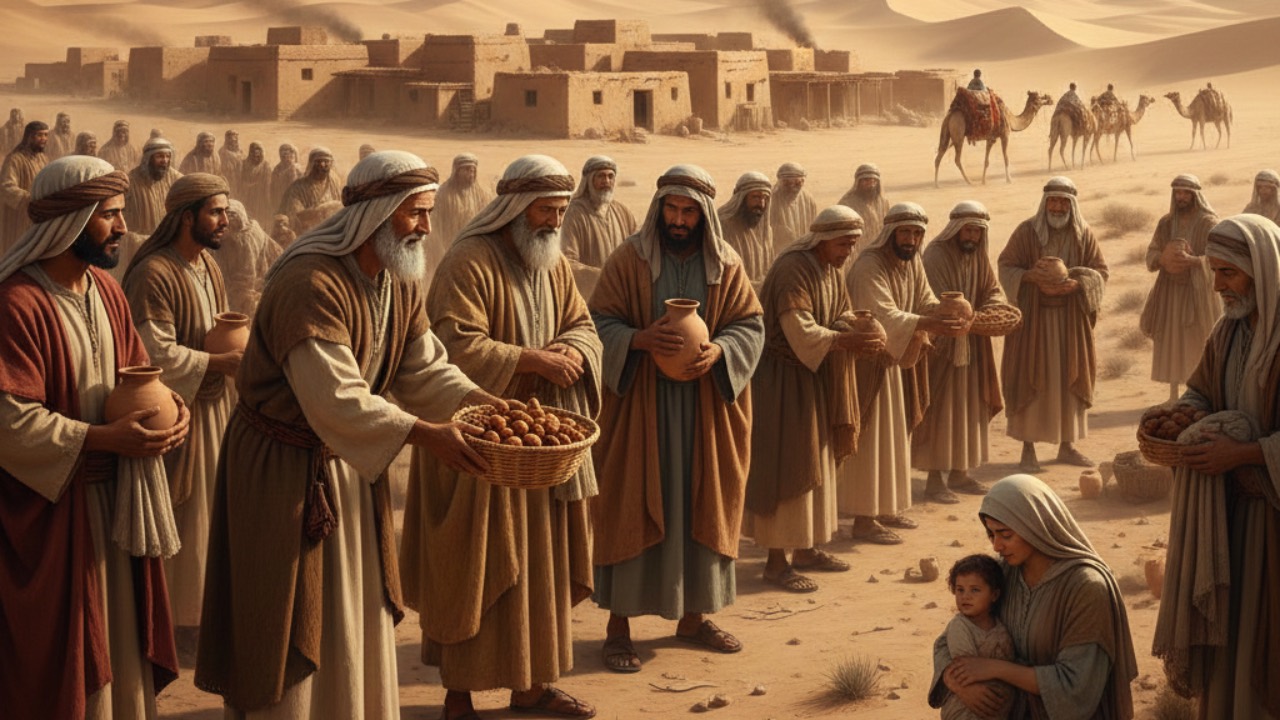
Secondly, it is intensely local and political. The early Ishmaelites are dealing with very specific problems: tribal vendetta, economic exploitation, Makkan oligarchy amongst the Mercantile elite, Byzantine and Sasanian pressure, fragile alliances. God's code is applied to questions like who marries whom, which alliances are trustworthy, what to do with war captives, how to distribute spoils, how to regulate trade and inheritance, how to restrain elites, how to empower the vulnerable to be active contributors to society. That early community is not sitting around debating Ashʿari vs Maturīdi metaphysics, or which "madhhab" they follow - all very irrelevant topics like today. Their questions are: Who is loyal to God’s messenger in practice? Who upholds the covenantal code when it costs them? Who betrays the movement for tribal or material gain?
Thirdly, there is no “Islamic civilisation” yet. There is a community of the faithful, an emerging polity in Yathrib, and a developing body of revealed guidance. But there is no “Islamic civilisation” with fully developed schools of law, settled sectarian boundaries, or elaborate state institutions. Those come later. If you dropped an average modern “Muslim” into that world, they would experience severe disorientation. Their entire mental map of what counts as “religion” would be missing.
2. From Ishmaelite community to imperial Islam
What most people call “Islam” today is, in part, the product of successive imperial epochs that reworked the Ishmaelite legacy for their needs.
The early empires of the Umayyads and Abbasids:
The Umayyads turn the movement into an Arab empire. Through state propaganda, Arab language and culture were elevated as superior. Custodian leadership (الخلافة) becomes monarchical. Non Arab believers are second tier for a while. The state uses covenantal language to legitimise power. Then come the Abbasids after a violent transition, presiding over an urban, cosmopolitan order stretching from North Africa to Central Asia. Under them, Greek philosophy is translated and incorporated, institutionalised schools of law crystallise, theological groups argue over divine attributes, free will, and the nature of the Proclamation, sufism develops as a "spiritual" discipline.
All of this is built on the Ishmaelite legacy, but it is already a different animal: an imperium with bureaucratic law, philosophical theology, and sophisticated court cultures.
Regional empires and local Islams
Over time, the Ishmaelite code is refracted through many political lenses: Fatimids, Seljuks, Mamluks, Ottomans, Safavids, Mughals each stabilise their own version of the covenantal order. Local customs, pre-existing syncretic spiritualities and ethnic politics reshape what being submissive looks like in West Africa, Central Asia, India, Southeast Asia, North Africa, and the Balkans. Inevitably, the result is not one depiction of "submission" but many interlocking regional characterisations, each making claims to “authenticity” yet deeply shaped by their imperial structures, trade networks, and social hierarchies.
Theology in service of empire
Across these centuries, legal schools are patronised by courts and certain jurists become “official” or at least preferred. The hadith collections that were canonised in earlier periods were used to police doctrine and practice. "Theology" develops through the hardening of creeds and catechisms that conveniently legitimise existing structures.
Over this time, the neo-Ishmaelite legacy is being continually interpreted. Inevitably, political convenience and social order shape what is emphasised and what is quietly sidelined.
An Ishmaelite from the first century would recognise some core ideas: one Creator, prophecy, salāh, fasting, Hajj. But they would also encounter elaborate metaphysics, bureaucratic legalism, and palace politics that would feel alien to the raw urgency and libertarianism of the earlier covenantal movement.
The colonial rupture and invention of the Musalman “religion”
Then comes Europe, and with it, military defeat and an intellectual crisis. From the late eighteenth century onward, the legacy imperial polities are outgunned, out financed, and out administered by European powers. Ottoman, Mughal, and other elites wrestle with various questions: Why are we behind? Is our law the problem, our theology, our governance, or all three? How do we “modernise” without apostasy? This is not a minor adjustment. It is a systemic shock.
Codification and “Anglo Muhammadan law”
Colonial powers treat “Muslims” as a legal (census) category inside their empires. Primarily in British India, they extract parts of covenantal (termed "fiqh") and freeze them into codes called “Muhammadan law”. They define “Musalmans” (later renamed Muslims in English) and “Hindus” for the purposes of census, personal status law, and administration. They decide which texts count as authoritative, then use them to adjudicate marriage, divorce, inheritance, and endowments. The result is that a flexible, discursive legal tradition is turned into rigid state codes and interpreted by colonial judges. This process helps create the Musalman religion as a modern, administratively legible category.
Reform, apologetics, and identity
Under colonial eyes, many Ishmaelite scholars and activists respond in predictable ways. Some reformers try to strip the tradition down to simple essentials that can compete in a modern world. Some cultural traditionalists double down on school loyalty and ritual correctness. And some activists attempting to engage newly structured political paradigms, turn “Islam” into a political ideology, a banner for anti-colonialism and later nationalist struggles.
All of those moves take place within categories largely defined by the colonial and modern world: “religion”, “civilisation”, “progress”, “backwardness”, “secular”, “modern”. It is already far from the world of Muhammad, where the language is covenant, allegiance to God’s messenger, and loyalty to a very specific regional community under pressure.
Islam in the neoliberal order: Muslimness as identity
In the late twentieth and early twenty first centuries, we arrive at “Muslimness. ” Several features define it:
-
Identity first, code...never
ChatGPT said:
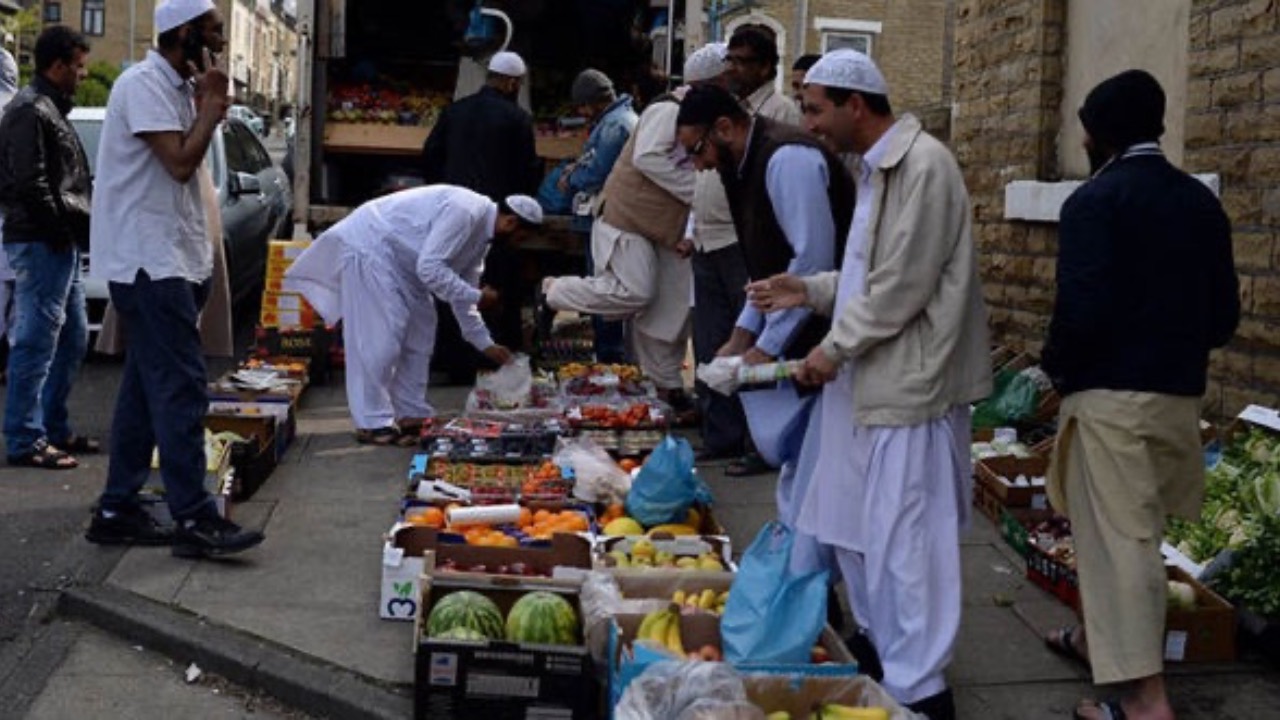
In the modern world, Muslimness is reduced to an identity and sits neatly inside the grids of the nation state, packaged as a protected characteristic, a census category, a diversity label that institutions can tick off to demonstrate inclusion. It functions as a visible minority identity, easily photographed, easily narrated, easily managed. The markers of Muslimness are mostly cultural and symbolic. A scarf, a beard, halal food, Ramadan observance, Friday prayers, the occasional slogan about “sharia” or “the ummah” - all of these become the shorthand for belonging. They are legible to the state, to universities, to HR departments, and to the broader multicultural order. These symbols offer a way to perform being Muslim without confronting the covenantal responsibility that once defined the Ishmaelite community.
-
Integration into the nation state
Every Muslim community is mediated by nation states: Saudi Islam, Turkish Islam, Iranian Islam, Pakistani Islam, French Islam, British Islam. Each is negotiated with ministries of religious affairs, security services, party politics, and media. The idea that Muslims today inhabit one seamless “Islamic ummah” that functions like the early Ishmaelite community is a pastoral fiction.
-
Absorption into neoliberal capitalism
The neoliberal order turns everything into a market segment. Islamic finance as a branded product line. Halal tourism, modest fashion, Muslim influencers, identity based NGOs. “Islamic” content as niche entertainment. This profoundly shapes how revelation is experienced: as one lifestyle option among many, not as a civilisational code that demands structural change.
From the perspective of a first century Ishmaelite who lived and died under Muhammad’s leadership, this would be unrecognisable. The vocabulary, the institutions, and the priorities are entirely different - beyond an aesthetic veneer. The core belief in one God and the honouring of Muhammad as messenger might be linguistically shared, but everything around it has been reconfigured.
3. The Messianic legacy: a similar story
Christians tell themselves a similar story of continuity. “We follow Jesus.” “The early Church and us are the same body.” Yet the Nazarene movement went through its own long, complex metamorphosis. During the time of the Nazarenes and early Jewish believers, Jesus is a late Israelite prophet, reformer, and teacher operating during Second Temple Judaism. His earliest followers keep the Iaraelite Law (Torah), worship the God of Israel, and understand him in the categories of Jewish messianic expectation. The community (church) at this stage is a growing group of Jewish ouliers, not a world religion.
Within a generation, Paul and others open the movement decisively to Gentiles where key battles erupt over circumcision, food laws, and how much of Mosaic law still binds non-Jewish followers. New theological language enters: justification, grace vs works, faith in Christ crucified and risen.
Already, the early Nazarene and subsequent Ebionite communities are being phased out and a first generation disciple might recognise the heart of devotion to God and allegiance to Jesus, but the cultural world is significantly widening.
Constantinian turn and imperial Christianity
The true seismic shift in the Nazarene story arrives when Constantine, the Roman emperor, adopts the Messianic legacy carried by the early followers of Jesus. Yet what he adopts is already filtered through the expanding Pauline tradition, which falsely universalised the movement and loosened it from its Jewish matrix. Retrospectively, this synthesis is presented as the natural continuation of Jesus’ mission but in reality it marks the birth of something new: Christianity as an imperial religion.
A persecuted sect becomes the ideological backbone of empire. Bishops, once local elders guiding scattered communities, suddenly become state officials, administrators of imperial policy. The community is drawn into the machinery of governance, wealth management, and public discipline. The language of the sword fuses with the language of the cross. What was once a marginal, ascetic movement proclaiming the kingdom of God becomes the paganised religious armature of Roman statecraft.
In this new order, orthodoxy does not emerge organically from the diversity of early communities. It is defined from above, in councils arranged and sponsored by Roman emperors. Nicaea, Constantinople, Ephesus, Chalcedon: each council further formalises doctrines that Jesus’ earliest followers never debated in such vocabulary. The metaphysics of the Trinity, the nature of Christ’s divinity and humanity, the precise relationship between Father and Son becomes the boundary line between truth and heresy. Those who disagree are not just alternative strands of devotion, they are legally marginalised, exiled, or crushed. From this process of imperial standardisation, numerous denominations crystallise: Latin Catholicism, Eastern Orthodoxy, Coptic and Syriac traditions, and later the splintering Reform movements. Each claims continuity with the Messiah’s legacy, yet each is shaped by the political, linguistic, and cultural pressures of its imperial environment.
There is a nominal thread connecting these later Christianities back to the Nazarene movement: Jesus, some of his moral teachings, and his symbolic authority. But the framing, the metaphysics, the institutions, and the social imagination are radically different. What began as a Messianic movement rooted in the covenant of the Israelites is transformed into a global imperial religion articulated in philosophical Greek and exercised through state power.
There continuity of symbol with the discontinuity of substance. The Messianic legacy is refracted through centuries of imperial interest, doctrinal consolidation, and cultural translation.
Medieval Christendom and the papal monarchy
Over centuries, Western Christianity becomes a sacramental system monopolised by a clerical hierarchy and a vast property owning institution. As a political actor it is involved in wars, crusades, and struggles with kings and emperors. The average medieval Christian encounters “Christianity” in the form of parish priests, feast days, relics, indulgences, inquisitors, tithes - a world where salvation and social discipline are intertwined under church authority.
Whatever Jesus was doing in Galilee, it did not look like the Papal States.
Reformation, Enlightenment, colonialism
Then comes the Reformation which fractures Latin Christendom into competing confessions. The Enlightenment critiques church authority, miracles, and revelation and within a couple of generations, colonial empires spread Christianity globally in close relationship with trade, conquest, and racial hierarchy. Additionally, modern biblical scholarship questions traditional views of authorship and history. By the modern period, you have liberal Protestantism, evangelical revivalism, Pentecostalism, state churches, and secular cultures that still claim a Christian heritage while sidelining God.
So a person who says “Christianity today is just what Jesus taught” is ignoring two thousand years of intense, often violent transformation.
4. The symmetry: Islam today and Christianity today
Once you see both stories side by side, the symmetry is obvious. Just as modern Western Christianity is the product of apostles, Nazarenes, Roman emperors, ecumenical councils, medieval papacy, Reformation schisms, Enlightenment philosophy, and colonial expansion, so modern Islam is the product of believing Ishmaelites, early stewards (caliphs), Abbasid developments, regional empires, Sufi orders, juridical schools, colonial codification, nation states, and now the neoliberal market.
In both traditions, certain core affirmations persist, that there is one God, God spoke through particular messengers, humans are accountable, and that there is a pattern of life that aligns with God’s will. But the forms in which these affirmations are lived, the institutions that mediate them, and the social imaginaries around them, have changed profoundly. To insist that Islam today directly and simply represents “what Muhammad taught” is as historically naive as insisting that Christianity today directly and simply represents “what Jesus preached”.
5. What can actually remain constant
If nothing historical stays the same, what can? The only realistic continuity is at the level of orientation and principle.
-
Acknowledging the Creator’s sovereignty
The enduring core is recognising that El’Lāh is the ultimate authority, not tribe, state, market, or self. This is not a slogan. It is a claim that the code we live by must be accountable to something above human whim. Power is a trust, not ownership. Wealth is a resource, not an entitlement. Human worth does not come from race, status, or consumption.
-
Commitment to the code
The code is not a fixed medieval manual. It is the enduring covenantal vision that fairness defined by God is required. People are free to seek contentment. Contracts, families, and vulnerable people are to be protected, and communities must restrain those who want to corrupt God's order and uphold the existential truth.
That code has to be reapplied in every age. The way it looked in 7th century Arabia will not be identical to how it should look in a post industrial, globalised world. But its spirit and logic can persist.
-
Adherence to principles of the covenantal law
Instead of clinging to the surface forms of past empires or the identity symbols of present politics, the question becomes:
- Does my political order respect human dignity and restrain the tyranny of corrupt humans?
- Does my social practice cultivate flourishing, truthfulness, trust, and responsibility, or does it feed vanity, fragmentation and oppressive social hierarchy?
-
Does my financial system honour the covenantal rules on exploitation and the concentration of power, or does it violate them and prove itself to be a disempowering order seeking subjugation?
If Muslims and Christians alike keep pretending that their current inherited “religions” are seamless replicas of the original movements, they will never seriously interrogate how far those movements have been captured by empire, colonialism, and the neoliberal doctrine, and whether they serve God as God wants. If instead they accept that history has morphed everything, they are free to ask the real question, which is not “Is this what our grandparents did?” but “Is this faithful to the sovereignty of the Creator and the covenantal code that was entrusted to His friend Abraham and his righteous descendents - which we are meant to uphold?”

Responses