
Theology vs The Covenant
The Proclamation (al-Qur'ān) consistently frames the human relationship with God as a binding pledge rather than an intellectual assent to doctrines. Humanity is depicted as having entered an ancient covenant prior to any theological formulation, a covenant that establishes responsibility before speculation ever arises. God states:
“When your Lord drew forth the descendants of the Children of Adam (the Semites) from among their own generations and bound them by their own acknowledgement: He said, ‘Am I not your sovereign Lord?’ They replied, ‘Yes. We affirm.’" (7:172)
This verse does not describe a theological examination, nor does it ask humanity to define God’s essence or attributes. It establishes authority and obligation. The acknowledgement of God’s lordship precedes theology and renders it unnecessary for covenantal validity. The covenant is reaffirmed not through metaphysical reflection but through instruction, law, and warning: “This is My straight path, so follow it, and do not follow other paths lest they separate you from His path.” (6:153) Covenantal allegiance here is directional and behavioural, not speculative. Follow the path and avoid deviation. Responsibility, not reflection, is the priority.
What today is “theology” rests on a misunderstanding of what the Proclamation is doing. It is not presenting a speculative system about God’s inner nature, nor inviting abstract metaphysical debate. It speaks as a declaration of sovereignty, allegiance, and consequence. Its concern is loyal alignment under authority, not intellectual categorisation.
From the outset, the Proclamation addresses human beings as moral agents already embedded in social, economic, and political life. It speaks to how power is exercised, how wealth circulates, how the balance of God's order is upheld, and how life is to be ordered psychologically, socially, economically, and politically in accordance with the King’s command. God is not introduced as an object to be analysed but as the sovereign source of judgement and accountability. Once this framing is understood, the irrelevance of later theological preoccupations becomes immediately apparent.
When the Proclamation speaks of God’s attributes, it does so in a functional register rather than a philosophical one. God is described as knowing, seeing, just, merciful, severe in retribution, and swift in account. These are not metaphysical claims offered for contemplation in isolation, or to be seen as random "99 names". They are reminders that action is observed, weighed, and answered for. The attributes exist to anchor responsibility, not to generate abstract reflection.
This prioritisation becomes explicit when the Proclamation actively limits speculative inquiry. When people raise questions that offer no covenantal benefit, God either curtails them or reframes the issue:
- “They ask you about the Hour. Say: Its knowledge is only with my Lord.” (7:187)
- “They ask you about the soul. Say: The soul is from the command of my Lord, and you have been given of knowledge only a little.” (17:85)
These responses establish boundaries. There are matters that do not enhance covenantal fidelity and pursuing them does not produce justice, restraint, or obedience. This is not anti-reason but covenantal prioritisation. The Iberian covenantal philosopher al-Shātibī pointed out that knowledge is valued only insofar as it increases responsibility and ethical clarity. God states: “The most noble of you to God is the most loyal of you.” (49:13) Loyalty here is not theological sophistication but disciplined faithfulness.
This logic also explains one of God’s most persistent criticisms of the Israelites. The failure is not framed as theological disbelief in God but as the displacement of obedience with disputation: “Do not be like those who became divided and differed after clear proofs had come to them.” (3:105) Division emerges when people shift from fulfilling obligations to arguing about belief. The Proclamation presents covenant as a unifying force grounded in shared responsibility, while theology multiplies division because speculative differences have no natural limit.
“Hold firmly to the rope of God all together and do not become divided.” (3:103)
The “rope” is not a theological system. It is the binding authority of God’s command. Fragmentation arises when shared obligation is replaced by competing abstractions, “each group rejoicing in what it has.” (30:32) The problem is not insufficient doctrinal precision but the evasion of covenantal commitment. Failure lies not in misunderstanding divine essence but in refusing to uphold God’s code, exploiting the vulnerable, and corrupting God's earthly order. Theology becomes dangerous precisely because it allows individuals and communities to feel “religious” while avoiding the actual task of covenantal compliance, inflating it into a proxy for covenantal fidelity. Contemporary religious cultures often prioritise formulation, identity policing, and orthodoxy yet the Proclamation decisively rejects this substitution:
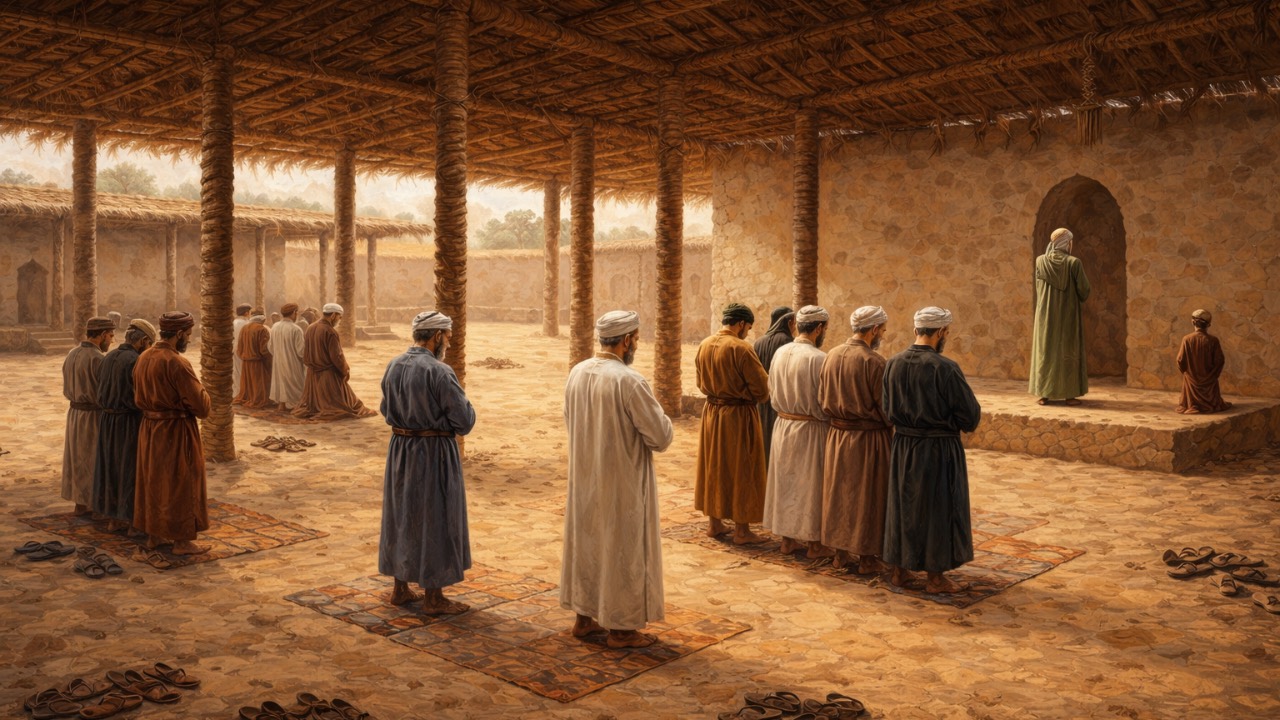
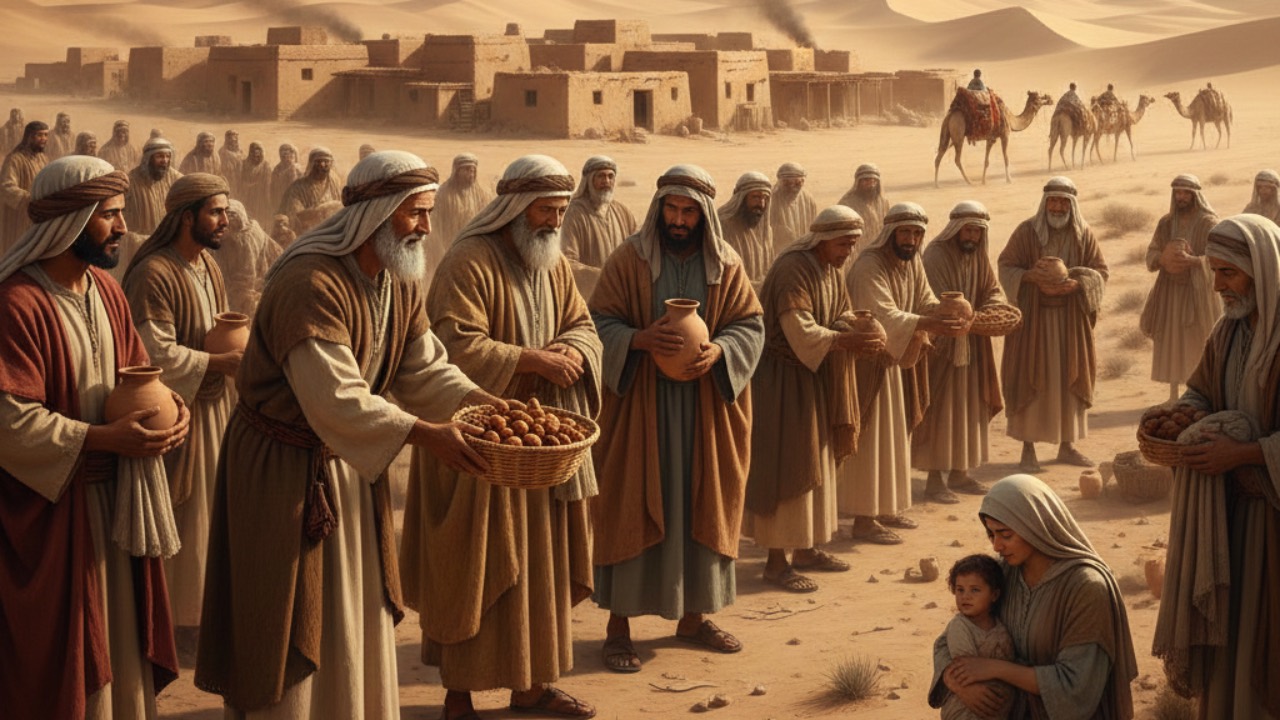
Goodness is not in turning your face towards East or West. The truly good are those who have faith in God and the Last Day, in (role of) the angels, the Decree, and the prophets; who give away some of their wealth however much they cherish it to their relatives, to orphans, the needy, travellers and beggars, and to liberate those in bondage; those who uphold the devotional connection (salāh) and pay the collective dues (zakāt); who keep pledges whenever they make them; who resolutely persevere in misfortune, adversity, and times of danger. These are the ones who show integrity, and it is they who are loyal. (2:177)
Orientation, symbolism, and abstraction do not constitute righteousness. As God explicitly explains, action does. The rupture the Proclamation condemns is between speech and conduct: “Why do you say what you do not do? It is greatly hateful to God that you say what you do not do.” (61:2–3) The failure is covenantal, not doctrinal.
Covenantal reasoning in the Proclamation follows a simple but demanding logic. The Creator has authority, issues commands and limits, and expects loyalty. Human beings are assessed on whether they honour those commitments under real conditions, especially when obedience conflicts with appetite, status, or group loyalty. Judgement is consistently tied to action rather than articulated belief systems: “Whoever lives by righteous acts that uphold the order, male or female, while being faithful, We will give them a good life.” (16:97) There is no reference here to theological correctness. Even faith itself is framed as a functional commitment rather than an abstract affirmation: “It is not in accordance to your wishful thinking nor the wishful thinking of those who were entrusted with the covenant (Jews and Christians). Whoever does evil will be recompensed for it.” (4:123) Identity and dogma are explicitly denied any substitutive power.
For this reason, the Proclamation shows little interest in resolving questions that would later dominate theological discourse. It does not analyse divine ontology, the mechanics of divine speech, or philosophical reconciliations between foreknowledge and freedom. These matters are not treated as necessary for covenantal fidelity because they do not alter what is required of human beings. What the Proclamation insists upon relentlessly is that disloyalty voids covenantal standing. Prayer without fairness is empty. Public piety coupled with private corruption is condemned in some of the strongest language the Proclamation employs. None of these failures are theological errors. They are covenantal breaches.
The danger of theology, when elevated as a mode of engagement, is that it displaces moral gravity. Speculation becomes refuge, identity replaces accountability, and people argue about God while ignoring their environment. The Proclamation repeatedly warns against communities diligent in ritual or claim, yet hollow in commitment to upholding God’s order.
Faithfulness (īmān) is never presented as abstract belief. To have faith is to bind oneself (aqīdah) to a way of life under God’s authority. Sever faith from obligation and it collapses into hypocrisy. Theology performs precisely this severance when faithfulness is reduced to a mental posture rather than a binding stance (aqīdah). The only meaningful answer to juvenile questions of creed is covenantal loyalty to God.
Early covenantal communities organised themselves around divine law, collective obligation, and social order, treating reason as a disciplined tool because reason detached from upholding God’s sovereignty and the covenantal order was understood to become corrosive. The legitimacy of reason derived from service to the covenant, not from autonomous self-expansion or abstract curiosity. Speculation was therefore judged not by its cleverness but by its consequences. Within the Ishmaelite legacy, jurists and exegetes resisted kalām not out of hostility to inquiry itself, but inquiry untethered from covenantal purpose. By contrast, the mukallimūn emerged in later political and polemical contexts developing systematic doctrine to defend communal boundaries, resolve internal disputes, and compete within plural intellectual landscapes. Supported by ruling elites and patronage networks, theology expanded as an instrument of legitimacy, apologetics hardened, and communal identities required defence within competitive doctrinal-political landscapes. This development, however intelligible in its own context, reflects historical contingencies rather than the original horizon of the Proclamation which addresses societies as moral orders under divine sovereignty rather than the way Pauline Christianity has framed them today: confessional communities defined by "beliefs".
To retroactively impose a theological framework onto the Proclamation is therefore a category error and theology, in this light, appears not as the core of the covenantal project but as a later accretion, politically and socially useful yet existentially irrelevant. Speculation about divine essence neither deepens loyalty nor repairs corruption of His order. Instead, it redirects attention from submission to intellectual self-assertion, refining language while leaving decay (fasād) untouched. Yes, the Creator is known through studying the cosmos and contemplating his majesterial power and creative ability, along with fidelity to the covenant, but it isn't in philosophical mastery. Knowledge is validated by its fruits, and "by their fruits you shall know them."
What the Proclamation makes clear is this:
- Covenant is the primary structure.
- Law, balance, and duty are its instruments.
- Theology is not required for covenantal fidelity, but recognising the Lawgiver is a pre-requisite.
The Proclamation’s concern is that people recognise the Creator and Caretaker of all things, and honour the pledge they have taken to serve the Sovereign. Conduct, not speculative contemplation, is the currency of the Abrahamic covenant. Where the covenant governs, theology naturally recedes. Where theology dominates, covenant erodes. These represent two fundamentally different orientations. One binds action to authority for the sake of upholding God's order. The other prioritises explanatory coherence and identity differentiation. God’s Proclamation is unambiguous about which matters. It repeatedly calls people back not to finer doctrines but to the balanced order, responsibility, accountability, and fidelity before the King.


Responses